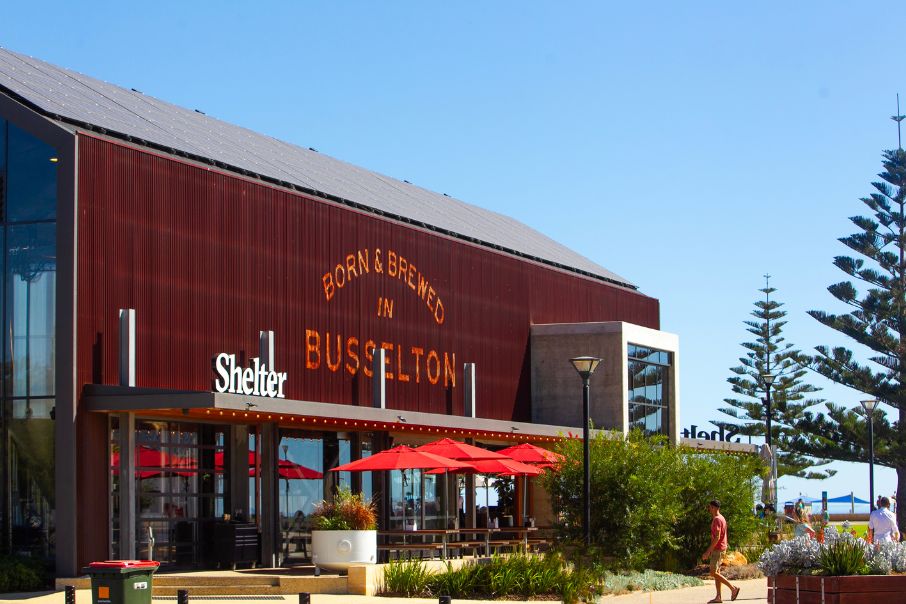


New players in the state’s brewery sector are finding unique ways to build a viable business.
Rhys Lopez obviously has a keen sense of irony.
At least that’s how it would appear given the rather provocative name of his business – Evil Mega Corp – despite the fact there’s no evil involved and it’s neither mega nor a corporation.
The one-man band left his position as Otherside’s head brewer in 2024 to pursue a solo project.
Mr Lopez got the idea from two Victorian breweries, which ran a subscription service alongside their primary retail business.
“I signed up for both the Molly Rose and the Dollar Bill subscriptions when they first came out and immediately started to try to figure out the numbers on it from a production standpoint,” he said.
“I spoke with a lot of customers in my previous head brewer gig, with a lot of them lamenting the way many craft breweries were moving away from experimentation towards safer options.
“It seemed pretty obvious from where I was sitting that, while appetite for these beers had declined, it hadn’t disappeared entirely, and the supply side may have overcorrected a bit.”
What came of this is, as far as Business News can ascertain, the nation’s first subscription-focused brewery.
Evil Mega Corp concocts a fresh batch of unique beers about once every six weeks. These are then shipped to the 500 or so customers who preordered them after seeing what Mr Lopez had planned.
Recipes are provided via a QR code on the can so subscribers – many of them professionals or homebrewers – can then brew the beers themselves.
Some leftovers end up on the company website for public purchase.
“I think that, for me at least, this is the best brewing job possible,” Mr Lopez said.
“Production roles don’t pay particularly well unless you’re working for a macro brewery, and I prefer to be on the tools to [being in] management.
“Now I don’t have to sit in meetings or spend my days making spreadsheets. I get to wake up in the morning and make whatever beers I feel like without running anything by a committee.
“I don’t have to worry about over- or under-producing a core range, because there is no core range.”
There have been challenges, of course.
The success of the business is entirely dependent on Mr Lopez’s willpower, scheduling holidays is trickier, and shipping is either reliable or affordable, depending which service is used, but rarely both.
The model has been a success. About half of Evil Mega Corp’s subscribers have been on board since day one, and demand is close to the point of oversubscription.
“A lot of craft beer folks want to try something new but they do not want to have to sift through shelves of cans to figure out what is fresh,” Mr Lopez told Business News.
“Subscribers get my beers within three weeks of packaging at the absolute maximum. In some instances they are three to four days’ old by the time they receive them.
“Larger brewers simply can’t achieve that on their scale. Once you have had proper fresh hoppy beer, it can be hard to go back.”
Paddock to pub
The allure of freshness is a point Mukinbudin farmer Calvin Squire raises regularly while sitting around the Mukinbudin Hotel, beer in hand.
Mr Squire’s Dandanning Brewery has enjoyed a symbiotic relationship with Romina Nicoletti’s Mukinbudin Hotel since 2022.

Calvin Squire and Romina Nicoletti outside the Mukinbudin Hotel, which has Mr Squire’s Dandanning Brewery beers on tap. Photo: Tom Zaunmayr
Mr Squire uses barley harvested from his farm near town to produce beers at his brewery, some of which can be found flowing from the taps at the Muka pub.
The only external inputs are the transforming of barley into malt – undertaken at Mortlock Malt in Goomalling – and the provision of hops, grown in the south of the state.
“I have a winemaking background but there is just a lot more barley,” Mr Squire told Business News.
“It would be even crazier to try and start a winery out here. I went with the less-crazy idea.
“A lot of breweries have their own brew pubs, but out here we have already got a pub and the population is limited. So rather than starting up a brew pub, I work with the already existing businesses in town.”
The collaboration started in 2022, a few months before broadacre farmer Romina Nicoletti bought the pub.
Mr Squire made a handshake deal with its former owners, the Piccolo family, to remove some commercial beers from the taps in favour of his local lager.
That deal evidently stood the test of time when the pub changed hands.
“The best thing was when I finally convinced Cal[vin] to come and do a couple of nights a week here, because I had so many people wanting to meet this fellow,” Ms Nicoletti said.
“It was great, because I could tell the caravanners he worked Tuesday and Thursday nights, and they would say ‘well we will come back Thursday night so we can talk to the brewer’.”
The lower carbon footprint and local nature of Dandanning’s beers excited Ms Nicoletti.
There was never concern the beer couldn’t be moved. Between tourists wandering the Wheatbelt and locals supporting their mate’s beer, the taps have been busy.
Swan Draught is still king at the Muka Hotel, but only just.
Across three years, Swan accounted for 42 per cent of tap sales and Dandanning 39 per cent.
“Tourist season for us used to be just wildflowers,” Ms Nicoletti said.
“It is from March to November with caravanners now. Since Covid it has not stopped
“If they go bush, they stop here for their last good feed and they just absolutely love trying what’s local.”
That local flavour won’t be around much longer, though, with Mr Squire having brewed his last beer for the Mukinbudin Hotel. He is moving to Collie with his young kids for his wife’s teaching job.
He’s adamant, however, that his business model would work anywhere in Western Australia.
“This came from the farming background, looking to value add,” Mr Squire said.
“For a farm business that has found it can’t expand anymore, there’s no land available, then definitely value adding on site is a good option.
“It doesn’t have to be beer. It could be flour; it is just about making something from your grain.”
Fleeting moments
Down on the south coast, Luke Low and his business partners make opening the doors to their brewery an event.
It doesn’t happen regularly, but when it does, Denmark’s Lights Beach Brewery shed is packed.
The brewery puts a schedule of its opening dates online and participates in a few local events.
Outside of that, Lights’ beer is on tap at a few local pubs and can be found in cans around the state.
“We have our normal production schedule, the brew days and all of that,” Lights spokeswoman Kristina Low said.
“For opening days [we look at] the prime time of the year where we think we’ll get lots of people through, that the weather is going to be nice, and that there is the opportunity to have a break in production.
“We look at school holidays, we look at whatever’s going on in the community, and we try and just pop the open weekends according to whatever we’ve been approved for in our event licence.”
Lights marked its one-year anniversary in January with live music, food truck feasts and a mix of locals and tourists chatting the afternoon away.

Lights Beach Brewing’s Kristina and Luke Low are eager to fund community groups. Photo: Tom Zaunmayr
The production line has been cobbled together with support from the town’s two other breweries – Boston Brewing Co and The Dam – and second-hand finds from places on the east coast.
Mr Low dabbled in brewing at Boston and managed to snag the brewery’s old canning line.
The Dam helped share the cost of the import of equipment both facilities needed.
“Being a self-funded startup business, that is how we have managed to make it work for us,” Mr Low said.
“Our business model isn’t to go for massive growth.
“Ideally, we could build slowly and as long as we are supporting the Great Southern and a little bit to the metro area, I think I’d be pretty happy with that.”
That local flavour is the essence Lights is trying to capture.
Beers have been made for the town’s footy club – the Denmark-Walpole Magpies – for whom Mr Low played as a junior and the Lows’ daughter’s current club.
“We did the Magpie Lager for them this last season gone, and that was really well received,” Mr Low said.
“They knew the money was going back to the club so people got on board with it.”
The local arts group, radio station, environmental centre and fireys have also been beneficiaries of endeavours to give back to date.
Lights Beach has capacity to produce about 40,000 litres of beer per year, and produced about 35,000L in its first year.
