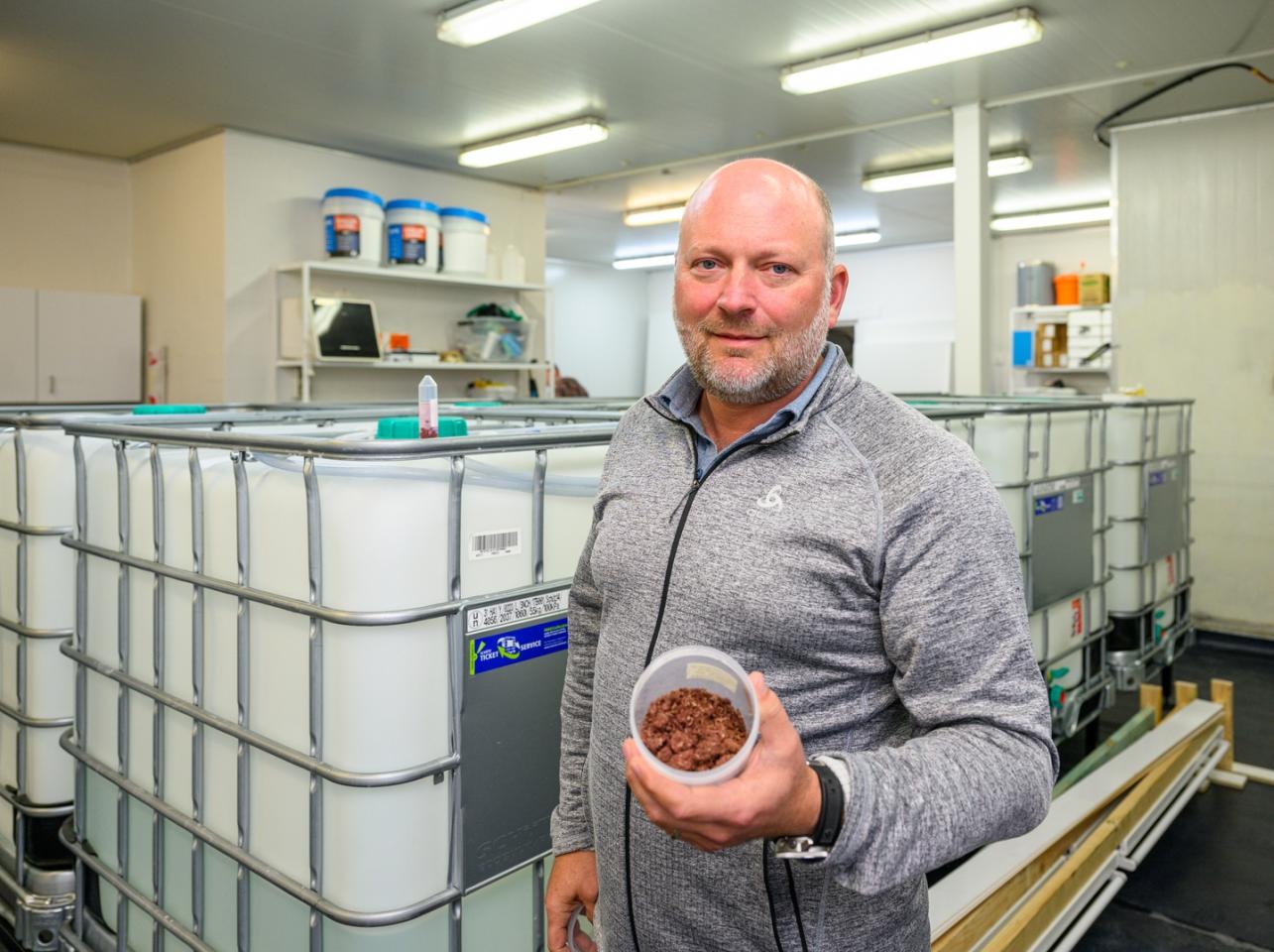
SeaStock will bring its innovative methane-reducing feedstock to Japan after inking an agreement with Tokyo-based Marubeni Innovexis to develop commercial opportunities in the land of the rising sun.
The Fremantle-based company transforms native Australian asparagopsis algae into AlgaToro, a bromoform concentrate, used in multi-billion-dollar industries.
It's a company built on more than a decade of research by the CSIRO, James Cook University and Meat and Livestock Australia, which identified the role of bromoform as a key bioactive marker in inhibiting methane-producing microbes in ruminant digestion.
While there are other companies extracting bromoform for methane-reducing feed additives in livestock from Asparogopsis, SeaStock's competitive edge is anchored in its unique, patented dual-extraction capability.
The process allows the company to produce two products from a single batch of Asparogopsis - AlgaToro and a natural red R-phycoerythrin pigment, Ruby Sea.
Ruby Sea has applications in cosmetics, food and beverage, biotechnology and pharmaceuticals.
Previous research by the CSIRO has found a diet containing 0.2 per cent asparahopsis reduces bovine methane emissions by 98 per cent.
Bromoform is a highly concentrated version of the feed additive.
SeaStock also uses an onshore cultivation method at its Fremantle facility, which chief executive Tom Puddy said offered superior control and biosecurity compared to alternative producers.
He has previously told Business News the onshore method was approximately 14 times more efficient per hectare than traditional offshore cultivation methods.
SeaStock chief executive Tom Puddy said the company's product would help address Japan's pressing need to decarbonise its livestock operations.
"Our partnership with Marubeni Innovexis allows us to bring our onshore-cultivated natural AlgaToro product to the Japanese market, meeting the urgent need for sustainable and effective solutions in the livestock sector," he said.
Under the agreement, Marubeni and SeaStock will work with customer partners in Japan to advance AlgaToro's market to the country.
It will also work on an approvals pathway with Japan's Ministry of Agriculture, Forestry and Fisheries for use as a feed additive.
The announcement also detailed intentions to assess and coordinate potential opportunities under Japan's J-credit scheme for methane reduction in the livestock sector.
The J-credit system is a government program that certifies the amount of greenhouse gas emissions reduced or removed by a product.
One metric ton of carbon dioxide reduced or removed is equal to one J-credit.
Credits can then be used, or traded via the Tokyo Stock Exchange, by companies to meet carbon offset goals.
WA Agriculture Minister Jackie Jarvis said the company had become a strong example of the state's marine science innovation capabilities.
"This strategic partnership agreement between Fremantle's SeaStock and Tokyo's Marubeni Innovexis Corporation is a landmark development in the commercialisation of seaweed aquaculture in Western Australia," she said.
"It demonstrates WA's huge potential to develop innovative production and extraction technologies that support the creation of new jobs and diversify the economy.
"Aquaculture is a growing sector in WA, and I am proud to see SeaStock taking their home-grown product to a global stage."
The announcement also mooted early discussions between SeaStock, Marubeni Innovexis and Nippon Beet Sugar Manufacturing Co to establish three-party cooperation to support the application and approval of AlgoToro as a feed additive in Japan.
The agreement followed news in June that SeaStock had been granted an aquaculture licence to establish WA's first commercial-scale, land-based Asparagopsis production facility in Oakford.
ASIC documents show Mr Puddy holds approximately 23 per cent of the company through directly owned shares or via a trust.
Mac Equity Partners executive chair and SeaStock co-founder Bryant James McLarty, who is also listed as a director, controls roughly 36 per cent through direct shares and his investment vehicle Lobster Pot Investments.
Mitchel Ben Jones is the company's third-largest shareholder with approximately 9.5 per cent of the shares.






 11 Jun 2026
 04 Dec 2025
 14 Mar 2025
 05 Feb 2025
 29 Nov 2024
 29 Nov 2024