

Profit imperative drives mine moves




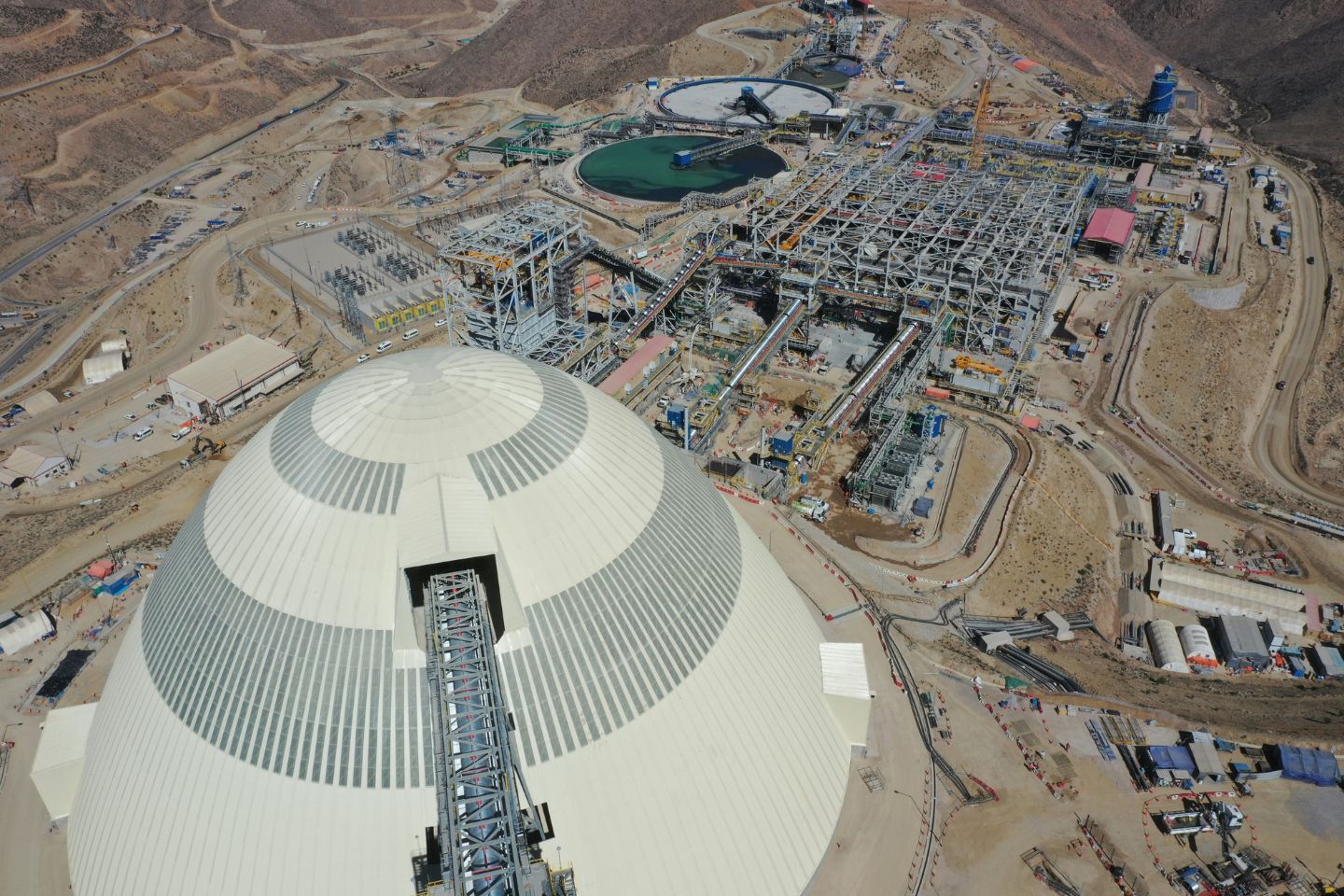
Australia is at risk of exporting more than minerals and metals, as evidence grows it is starting to export the entire mining industry.
Obviously it’s not possible to ship out a hole in the ground, but it is possible to sell the skills developed here and provide the capital for mining projects being developed elsewhere.
In one sense that is the history of extractive industries, as experienced in countries such as Sweden and Britain, which once had big mining industries but now sell technical knowledge while also providing skilled professionals.
Whether Australia is ready for the shift has yet to be debated, but it will eventually become an issue as governments realise that high costs and a toxic combination of red and green tape are driving miners out of the country.
If nothing else, the potential loss of tax and royalty income ought to have governments on alert, because once an industry leaves it is unlikely to return, creating a large hole in everyone’s budget.
BHP’s failed attempt to merge with arch rival Anglo American was a warning shot about miners’ efforts to find opportunities outside Australia.
What caught the eye of BHP was Anglo American’s high-quality copper assets in South America. Just about everything else, including Anglo American’s Queensland coking coal assets, would have been discarded before or after a successful takeover.
Unknown, but ready to resurface if/when BHP makes its next move on Anglo American, is the fate of a planned major expansion of its copper assets South Australia, which would struggle to compete for capital with the highly competitive mines of South America.
The question over South American versus SA copper is theoretical, whereas a list of current investment plans is the starting point of what could become a trend as Australia prices itself out of the mining market.
BHP’s latest quarterly operational review lists just two major projects: the $US5.7 billion first stage of the Jansen potash development Canada, and the $US4.9 billion second stage of Jansen.
Conspicuously absent are any projects in Australia, traditionally the location for many of the company’s big investments.
A more likely BHP event affecting Western Australia this year is a decision on the fate of the Nickel West business, which is struggling to survive at a time of depressed nickel prices and competition from low-cost Indonesian mines.
Rio Tinto, the other big international miner with heavy exposure to WA, is perhaps a better example of what happens when a management team is presented with competing investment openings.
The answer, of course, is to allocate capital to the most profitable project because that’s what shareholders want.
The Simandou iron ore mine in the West African country of Guinea is the focus of Rio Tinto’s iron ore expansion projects.
In WA, Rhodes Ridge is slated as next in line on the major projects list, but not until a feasibility process is finalised. First ore at the project is not expected until the end of the decade, at the earliest.
There are seven other projects on Rio Tinto’s list of growth and development opportunities. One is in Australia, the Winu copper/ gold project, with others in Canada (aluminium), the US (copper at the Kennecott and Resolution projects), Serbia and Argentina (lithium), and the Nuton advanced copper processing project with six partners in four countries: Chile, Peru, Argentina and the US.
Smaller companies are also increasingly looking elsewhere for exploration and development opportunities. Among them is Perth-based uranium miner Paladin Energy, which has its head office in St Georges Terrace while managing a mine in Namibia and a takeover in Canada.
It is possible that Paladin might resume interest in Australia, though its most advanced exploration asset is the Michelin project in Canada.
Meanwhile, Woodside Energy’s Scarborough gas project in WA is potentially its last big investment in Australia.
In its latest quarterly report, Woodside mentioned two other new developments alongside Scarborough: the Sangomar oilfield off Senegal in Africa, which has just started production; and the Trion project in Mexico.
The Sunrise project off Timor is being looked at again, as is the deepwater Calypso oilfield in the Caribbean. The only exploration projects mentioned are in the Gulf of Mexico.
Australia’s tough exploration and project development approvals process has turned away potential foreign investors and driven local companies overseas, with critical and technology metals the only resources being actively encouraged by government.
There is a risk that allowing politicians to choose minerals they think will be winners, such as lithium and nickel, could be backfiring (given the outlook for both is far worse than for most other commodities).
According to and investment bank Citi, lithium is in “freefall” and more mines are likely to be closed than opened.
Another bank, Morgan Stanley, has nickel close to the bottom of a preferred commodities list. Annoyingly for coal haters in government it has hard coking coal at the top of its list thanks to strong demand from India.
Talk of Australia becoming a green energy superpower is starting to look like most earlier government visions for the resources sector: unrealistic and unlikely to happen, because Australian resources companies are seeking a better future elsewhere.
Trade dangers
AN unattractive domestic investment outlook could soon be made worse by an alarming international trend to try and wind back globalisation.
The flashpoint for what’s happening is the US presidential election where Donald Trump and Joe Biden are trying to outdo each other with promises to use trade rules to punish China.
Mr Biden is pursuing a policy he calls “de-risking”, which means increasing tariffs (import taxes) on Chinese goods, especially the electric vehicles that threaten the US car making industry.
Mr Trump is promising much more, a “de-coupling” of the US and Chinese economies through a 60 per cent tariff on all Chinese goods, plus a 10 per cent tariff on imports from other countries.
No prizes for guessing that Australia, with its role as a major provider of raw materials to China, would be a victim of an all-out trade war.
Fortress America – a concept that evolved a century ago as a way of avoiding foreign wars but morphed into an economic theory – is showing signs of returning as a reaction to anti-Chinese sentiment in the US.
If that view evolves into something more than political bluster, the world could become a more dangerous place from next year.

