A heavy period. Exhaustion that sleep doesn’t fix. Debilitating pain every month.
Many women experience this and sense something is not right. But an alarming number don’t see those symptoms as a reason to reach out for help, a normal part of being a woman, and they push through the pain.
That difference comes down to health literacy.
In the leading WA women’s health research report, The Voice of 1000 Women, over a third of women in WA (35%) said they don’t know enough about their health, and their bodies.
These are women managing periods, pregnancies, fertility, perimenopause and menopause – while balancing careers, raising families and caring for others – often without the knowledge to recognise symptoms, understand a health condition or know when to seek help.
A major systematic review published in the Annals of Internal Medicine found that low health literacy connected to more hospitalisations and emergency care. People with low health literacy are less likely to understand labels and health messages, have poorer health overall, face higher health care costs – and they even have higher mortality rates.
What a woman knows and how confident she feels acting on it, shapes whether she books her screening, recognises the symptom that isn’t normal, or puts it off until it becomes urgent. That difference can be life-altering.
In the workplace, this shows up as unplanned leave, women pushing through painful conditions, and capable women stepping back from their careers entirely.
‘Women aren’t short on questions, they’re short on the education to know what doesn’t feel right. When a woman understands what’s happening in her body, she walks into her GP appointment knowing what to ask, and walks out knowing what to do next.’ – Maxine Robinson, Health Promotions Lead at Luma.
Study participants in The Voice of 1000 Women said what was missing. ‘The main improvement needed is education for women,’ one study participant in The Voice of 1000 Women said. Another stated: ‘Not enough is taught about the menstrual cycle and reproductive system. Women don’t know their own bodies.’
The findings found that young women (aged 18-24) are the least equipped with the knowledge they need, with only 20% rating their health knowledge as excellent – the lowest of any age group – while 21% rate it as poor, the highest. This is the very age when health patterns lasting decades are formed.
The good news is that women know where to turn. General practitioners are the most trusted source of health information and advice at every stage of life, and that trust grows with age. Among women aged 18 to 24, 57% entrust their GP with health information, followed by family (41%), friends (38%) and online searches (34%). By age 75 and over, 85% trust their GP, well ahead of other health professionals (35%), family (29%) and search engines (27%).
Beyond the GP, women lean on online searches and other health professionals for information – and when it comes to taking advice, on female friends and family.
Women’s health doesn’t just live in clinics. It lives in kitchens, in group chats, between mothers and daughters and between friends. That is what makes health literacy so powerful: it travels. When a woman has good health information, so does her sister, her daughter, her mother and her closest friends.
Few places reach women at every life stage, week in and week out, the way a workplace does. It is also where the cost of a knowledge gap is quietly felt.
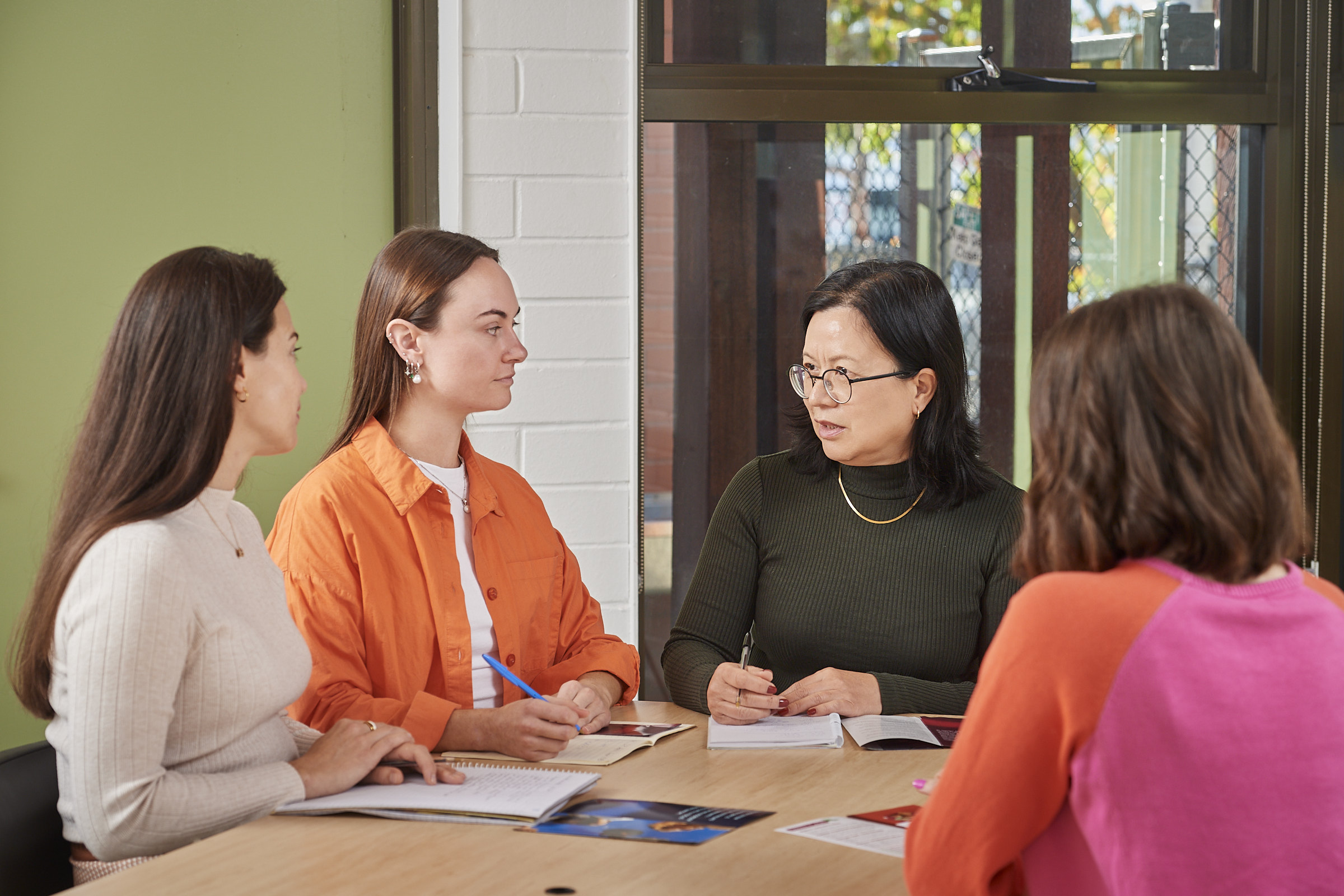
Luma is working on closing this gap. As a not-for-profit organisation specialising in women’s health and wellbeing across the entire lifespan, Luma takes essential health knowledge directly into workplaces – meeting women where they are. Luma’s health and wellbeing education team runs educational talks and workshops on stress, hormones, menopause, endometriosis, menstrual cycles and how to navigate the right healthcare pathways.
The aim is simple: women who understand their bodies, know when to seek help and feel confident speaking up – at work, at the GP and at home.
When you invest in one woman’s understanding of her health, you empower more than just one person. You reach her community, her family, her friends – and it comes back to the workplace as a healthier, more confident workforce.
Bring Luma’s women’s health knowledge into your workplace: https://luma.org.au/services/corporate-education/
About Luma
Luma is one of Australia’s largest not-for-profit organisations specialising in women’s health and wellbeing. Established in 1977, Luma has grown from a small medical and counselling clinic for women into a holistic, integrated, one-stop healthcare destination for all women.
Written by Sarah Allen, Brand & Marketing Lead, Luma
Photography by Frances Andrijich
Project managed by Maxine, Health Promotions Lead, Luma
Contributions from Kylie Marston, General Manager of Business Development, Luma
References
1. Luma. The Voice of 1,000 Women: A statewide study of women’s health in Western Australia. Perth: Luma; 2026.
2. Berkman ND, Sheridan SL, Donahue KE, Halpern DJ, Crotty K. Low health literacy and health outcomes: an updated systematic review. Annals of Internal Medicine. 2011;155(2):97–107. https://doi.org/10.7326/0003-4819-155-2-201107190-00005