Next month Southern Ports is proudly supporting the iiF26 Conference in Bunbury, which is a great opportunity to explore how we can collectively unlock full potential of the South West.
The Innovative Industries of the Futures Conference, now in its third year, brings together industry leaders, government stakeholders and visionary academics to tackle the question ‘what iiF we could change the world?’.
It’s a similar sentiment to the one the Southern Ports’ team faces when it considers how it should develop its three gateway ports to meet the changing needs of industry and their interconnected regional communities.
The inherent challenges in planning the long-term future of intergenerational assets such as berths and shipping channels relies on collaboration – which is precisely why Southern Ports has been a backer of the iiF Conference since the very start.
“In order to plan for the future of our ports we need to understand what others are planning for our regions, and that means being involved in discussions right from the early stages on broader regional projects,” Southern Ports CEO Keith Wilks said.
“We love being a part of targeted regional conferences because they raise innovative ideas within a local context.
“From the small-scale and relatively straight forward through to ambitious projects that can take much longer to come to fruition – the more we know, and the earlier we know, the better we can shape our ports to cater for opportunities that ultimately benefit our regions.”
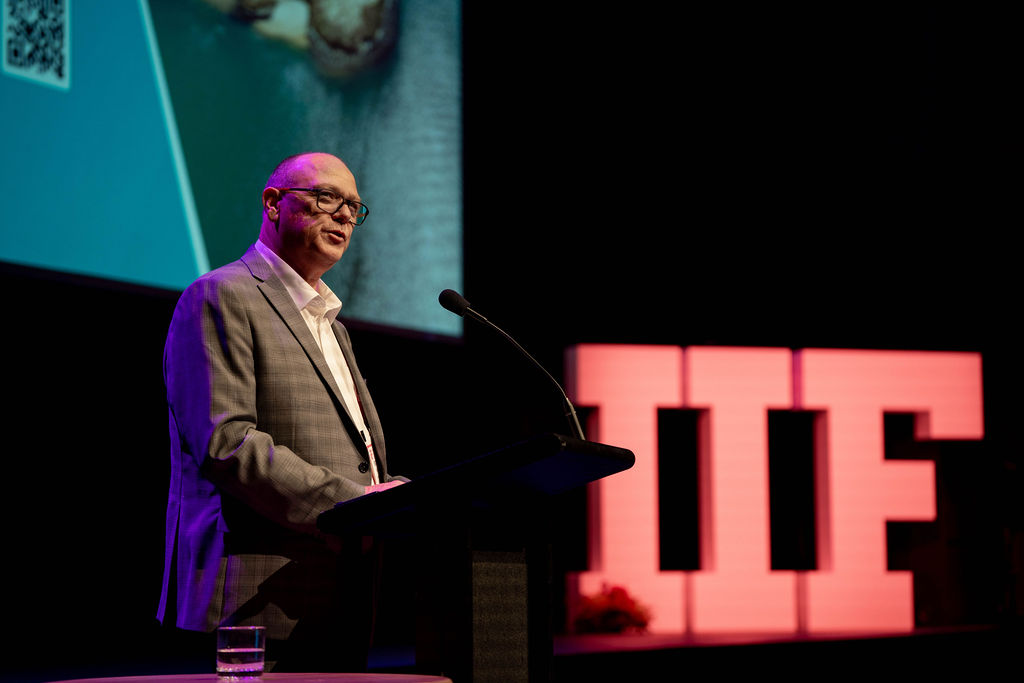
Southern Ports Chief Executive Officer speaking at the iiF Conference in 2024.
Long-term planning for the ports at Bunbury, Esperance and Albany so they can continue to connect the country’s south west industries to global markets is a constant.
Even amid a significant period of asset renewal and infrastructure investment there needs to be a keen eye focused on the future so that the three ports are ready for growth before capacity constraints arise.
“We can’t transform our ports overnight, so we need to stay ahead of emerging opportunities and sustainably develop for what’s next,” Mr Wilks said.
“In depth discussions with customers, community, government and a host of other stakeholders allow us to develop a clearer picture of what the future holds.
“With that picture in mind we are much better positioned to explore the best way to facilitate trade in ways that deliver results for our regions.”
The exciting emergence of new industries can be hardest for port authorities to account for in its plans, but it is nothing new for the three southern WA ports.
“Working with new industry is a core part of our role as a trade facilitator,” Mr Wilks said.
“Every established industry starts off as a new industry, so our ports have been adapting and developing alongside innovative thinkers for centuries.
“The challenge has not changed; it has always been about investing in the appropriate infrastructure and assets, so they are available at the right time to align with successful innovation.”
Focusing on the South West, you only need to look at how the Port of Bunbury’s inner harbour has developed over the past 50 years to see that support of innovation.
The inner harbour’s first two berths opened for the Port’s woodchip and alumina customers in 1976 and has grown to five busy berths since.
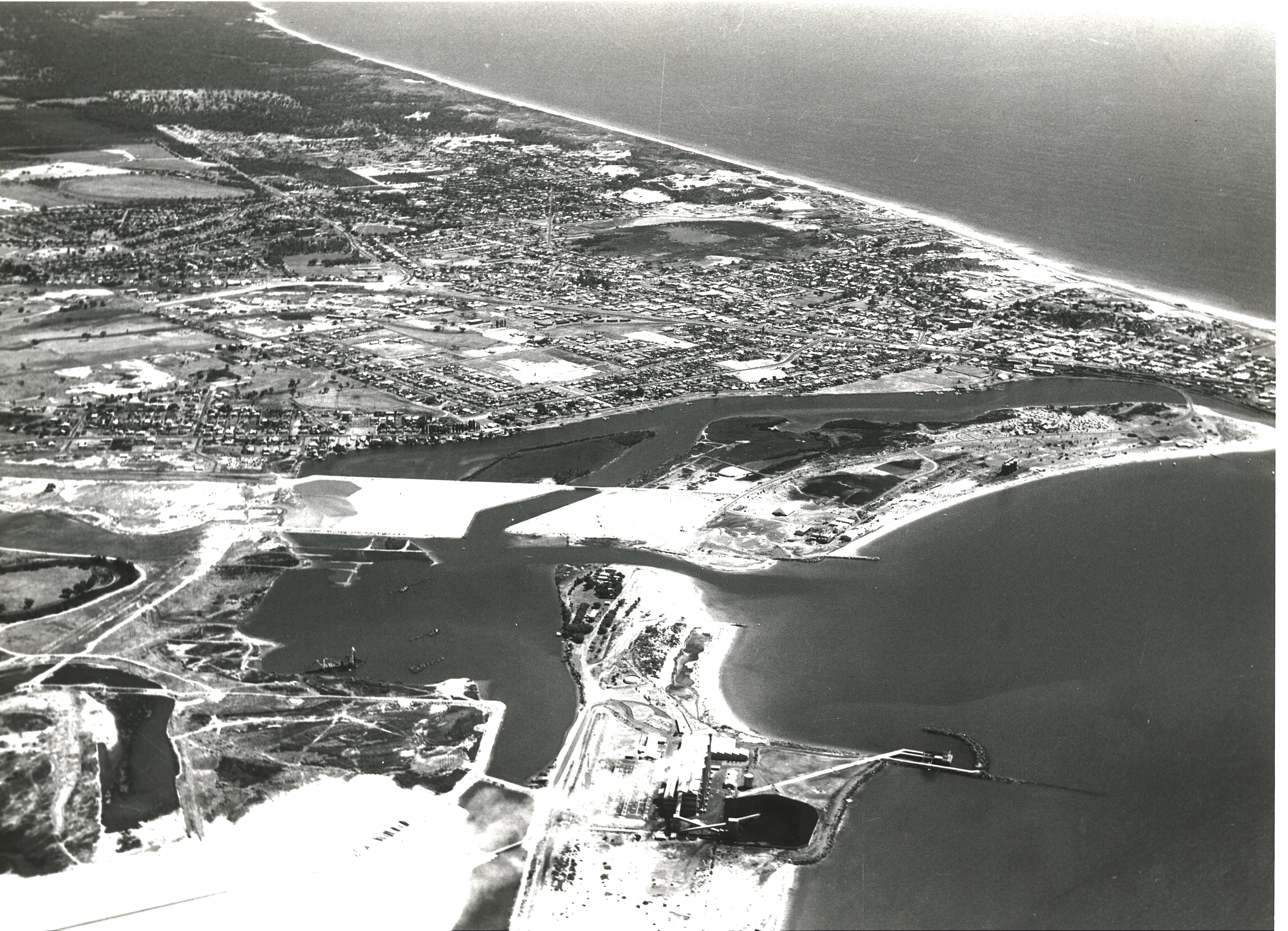
The Port of Bunbury inner harbour under construction in 1971, five years prior to welcoming its first vessels.
More recently the Port has become the largest spodumene export port in the world in a time where demand for lithium-rich mineral has spiked dramatically amid the global renewable energy push.
That growth was built on the foresight of previous generations, just as future success will be determined by the foresight of its current custodians.
“The Port of Bunbury is a major economic asset for the South West and has been for well over a century,” Mr Wilks said.
“While continuing to support existing trade, we now have a responsibility to ensure Bunbury is well set up for new opportunities across renewable energy, advanced manufacturing, mineral processing and agriculture sectors as well as other emerging industries as they arise.”
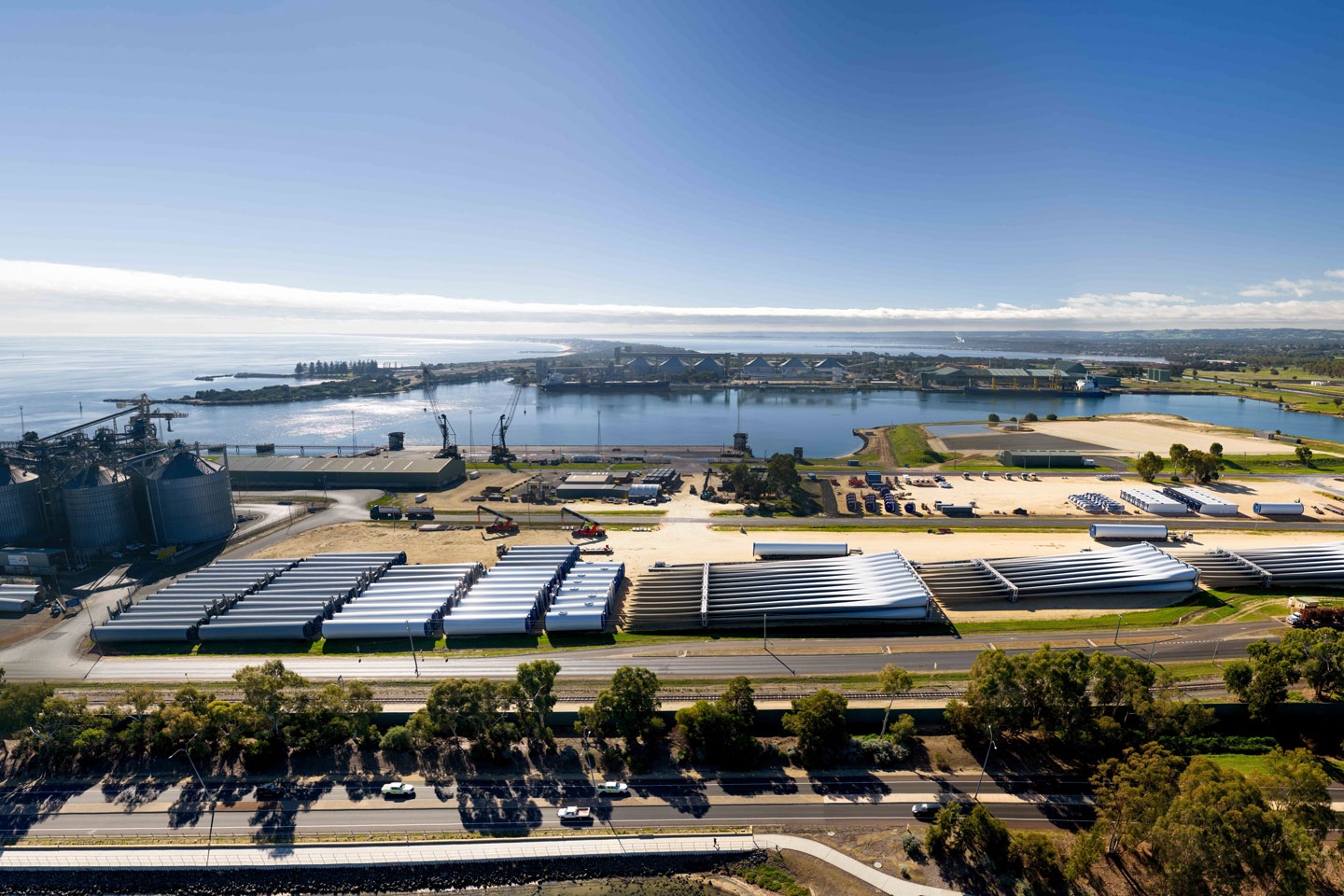
Bunbury’s seven berths and adjoining infrastructure take up a relatively a small fraction of its 470-hectare landholdings managed by Southern Ports which expands neatly within existing freight corridors.
How to best utilise that space so the Port can grow with the region and the state is the key focus of the Bunbury Port Optimisation Plan (BPOP) currently in its first stage.
“BPOP is not a single construction project – it’s a long-term blueprint for the Port’s development to allow for a coordinated and staged expansion that considers future berth, shipping channels, port land and precincts requirements,” Mr Wilks said.
“Within Stage 1 planning we are very cognisant that any infrastructure developed for the short or mid-term should not limit future opportunities.
“This is about planning ahead rather than waiting for capacity constraints to emerge and we have a simple goal: make sure the Port of Bunbury is ready for the South West’s next generation of trade and industry.”
Learn more about the Bunbury Port Optimisation Plan at the iiF26 Conference 26-29 October.