Heritage and design experts gathered at the 190th anniversary of the city’s oldest building to ponder the challenges of adaptive reuse.
Constructed in 1836, the Old Court House is the oldest building in Perth city and the second-earliest surviving colonial structure in Western Australia.
The 190-year-old limestone structure overlooking Stirling Gardens has had several incarnations since Governor James Stirling called for its construction to serve a fledgling Swan River Colony of about 600 European settlers.
It has been a court house, church, school, concert hall, immigration depot, supreme court, gardener’s cottage and arbitration court.
Since 1965, it has been home to the Law Society of Western Australia, and since 1976 it has housed Australia’s first law museum.
That history of reinvention made it a fitting venue for a discussion on the future of the state’s heritage buildings.
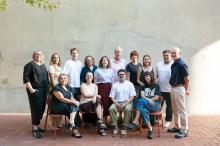
Hosted as part of the Old Court House’s 190th anniversary celebrations and inspired by the museum’s Evolving Walls, Evolving Stories exhibition, the forum included a panel discussion by architects Christopher Paterson and Sandy Anghie, and Heritage Council of Western Australia chair Darren Foster.
Moderated by H-U community development lead and Spacemrkt director Sarah Booth, the discussion explored a question confronting cities across Australia: how do we preserve historic buildings while ensuring they remain relevant, useful and economically viable?
If there was a common theme, it was that heritage buildings survive not because they remain unchanged, but because successive generations find new purposes for them.
Mr Foster has chaired the body advising the state government on heritage matters since 2023.
The tragedy we saw quite often, he said, was heritage buildings sitting idle.
“If you see a heritage building that isn’t being used, isn’t being loved, and if it hasn’t got a function, no-one’s going to maintain it, so it will just deteriorate,” Mr Foster said.
Over time
Mr Paterson is the driving force behind Christopher Paterson Heritage and Architecture.
He has worked on heritage projects such as the Fremantle Prison, which was built between 1852 and 1859.
Mr Paterson’s work also includes William Street’s Wesley Church and the Wesley Church on Cantonment Street in Fremantle, the Fremantle Prison, Fremantle’s Victoria Hall.
The Old Court House, he told the forum, demonstrated how adaptation had always been part of heritage.
“You are sitting in the oldest building in the city, designed in 1836 by Henry Reveley,” Mr Paterson said.
It remains one of the two remaining works by Mr Reveley, a civil engineer, the other being the Fremantle Roundhouse (opened 1831).
“It [Old Court House] might be one of the original multifunction buildings,” Mr Paterson said, adding the building’s ability to evolve had arguably been the key to its survival.

Unlike many historic structures that fell into disrepair after losing their original purpose, the Old Court House remained embedded within civic life.
Court sessions gave way to education, legal institutions, cultural programs and public engagement.
That evolution continues today.
The Old Court House Law Museum, managed by the Law Society of WA, operates six days a week with free public entry.
It has significantly expanded its reach in recent years.
Annual visitation has grown from about 6,000 people to approximately 20,000, according to the law society.
About 7,000 of those visitors are students participating in educational programs and mock trials, exposing younger generations to both the legal system and the state’s history.
Telling new stories
Perhaps the most striking example of that evolution is the museum’s upcoming Let the Walls Speak project.
The initiative will reimagine the building’s entrance gallery and the stories visitors encounter when they arrive.
Rather than focusing primarily on colonisation and its impacts, the new exhibition aims to place Noongar law alongside colonial law, presenting both traditions in parallel and creating a more balanced interpretation of WA’s legal history.
Supported by Aboriginal cultural consultants, the initiative has attracted strong philanthropic support, raising $83,000 of a $110,000 target and including contributions from Sandy and Michael Anghie and Janet Holmes à Court.
For heritage aficionados, the initiative highlights an increasingly important point: preservation is not simply about protecting physical fabric but also reassessing how stories are told and whose voices are represented.
Mr Foster argued storytelling was critical to building public support for heritage conservation.
“You’ve got to tell the story about the place, because that’s what really brings it to life,” he said.
“What happened here?”
The Old Court House offers plenty of answers.
Among its more consequential moments was a meeting in 1849, where a petition supporting the establishment of a penal colony was adopted, a decision that would profoundly shape the state’s development.
“Finding those little stories to tell about the place is part of the art of building public support for heritage protection,” Mr Foster said.
Reuse costs
The major barrier to ensuring the protection of many heritage projects is the question of financing.
The economics of adaptive reuse remain one of the sector’s greatest challenges.
Mr Foster said heritage buildings often required substantially greater investment than contemporary developments, while generating less predictable returns.
“Hats off to any developer that takes on a heritage building,” he said.
“We want to make it easy for them, not difficult for them.”
The challenge can be even more pronounced when governments are the owners.
The Old Court House sits within the Department of Justice portfolio, despite being managed and activated by the Law Society of WA.
Mr Foster said government agencies often struggled to allocate sufficient resources across extensive property portfolios.
“Where are you going to put your very meagre maintenance dollars?” he asked.
“You’re going to put them into the properties where there’s the highest use.”
Heritage buildings require proactive maintenance, Mr Foster said, yet government systems often operated reactively.
“Heritage buildings don’t lend themselves very well to reactive maintenance,” he said.
“They deteriorate so rapidly.”
One solution under discussion is divestment, whereby private owners or community organisations take responsibility where governments lack the capacity to maintain assets adequately.
“We’ve been aware that we have a heritage grants program and government departments are not eligible for the program, nor for Lotterywest funding, so they have to fight the battle internally to get some resources they need to look after their heritage buildings,” Mr Foster said.
Learning from success
The panel pointed to several examples demonstrating the potential of adaptive reuse when investment, vision and heritage conservation align.
The benchmark remains Perth’s State Buildings redevelopment by developer Adrian Fini.
Mr Foster described the Old Treasury Building as one of the state’s standout heritage projects. The complex sat largely idle for almost 20 years before being transformed into one of Perth’s most successful mixed-use destinations. “It has become a real hub,” Mr Foster said. “And that’s really what we’re after.”
Ms Anghie described the State Buildings as an extraordinary adaptive reuse project that helped reshape perceptions of heritage across the city.
“I think we’ve seen now a genuine appreciation of heritage,” Ms Anghie said.
The project also helped reconnect the eastern CBD with the rest of the city, she added, after decades during which the vacant complex acted as a physical and psychological barrier.
Not every heritage success requires hundreds of millions of dollars, however.
Ms Anghie is deputy chair of the Law Society of WA and the founder of Perth Design Week.

Sandy Anghie is a big supporter of the preservation of old buildings. Photo: David Broadway
She has held many events at the Liberty Theatre, which is a much smaller-scale restoration by developer Randal Humich.
Ms Anghie also highlighted the activation of the old Westminster House on Pier Street with creative venue Huzzard Studios.
In comparison to the $105 million State Buildings redevelopment, relatively modest interventions focused on safety and accessibility allowed the buildings to be reactivated.
“What people really loved ... was [there’s] still decades of graffiti on the wall,” Ms Anghie said of the Liberty Theatre.
“The exposed brickwork or the exposed timber, and it’s just the rawness of it.”
Even relatively modest heritage projects face significant regulatory hurdles.
Modern building codes, accessibility requirements and liability concerns often create tensions between preservation and contemporary use.
Mr Paterson said understanding a building thoroughly before making changes was essential.
“If you understand the place, you’ve got a much, much better chance of getting these things right,” he said.
Research and conservation planning help identify which parts of a building can accommodate change and those that should remain largely untouched.
The practical realities remain unavoidable, however, given people need toilets, kitchens, accessibility improvements and fire safety systems.
Chistopher Paterson's portfolio includes the Old Court House and other significant heritage buildings. Photo: Christopher Paterson
The challenge lies in incorporating those requirements without compromising heritage significance.
Mr Foster described these decisions as the Heritage Council’s daily work and, in some cases, that meant making compromises.
“Partial demolition might actually be necessary in order to achieve a bigger and more successful outcome,” he said.
The alternative – an empty, deteriorating building – was often worse.
Liability concerns present another challenge when owners can face significant legal exposure if buildings fail to meet modern safety expectations.
Mr Paterson pointed to the narrow staircase leading to the Old Court House’s mezzanine level as one example of how heritage features can conflict with contemporary standards.
The National Building Code has been the cause of headaches for heritage councils across the board.
“The code is going to get tighter ... and every heritage council around the country is grappling with the same issue,” Mr Foster said.
“No individual minister, no tiny government instrumentality, like your heritage council, or even one level of government can fix [it].
“There needs to be a [national] solution that is practical and pragmatic, so we can get these places to be used without putting people at risk.”
However, Mr Foster said there were ways to work with the code, but they often added cost and complexity.
“There is also probably a little more flexibility in the code than people appreciate,” he said.
Towards 2029
Earlier this year, Business News revealed a major redevelopment to take place near the Old Court House.
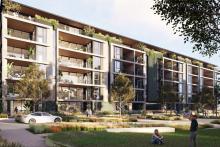
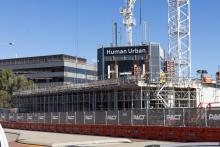
St Martins Properties – a company owned by the Kuwaiti government – released details of its $250 million plan to transform three CBD skyscrapers into hotel, office and retail space.

St Martins Centre is set to be converted into a hotel, premium office space and retail development. Image: Woods Bagot
The proposal includes heritage assets the McNess Royal Arcade (opened in 1897) and the mid-1970s Bridal House.
Mr Foster was particularly excited by the planned restoration of the arcade.
“You wouldn’t really notice if you walk in … but it’s really ornate and spectacular,” he said.
“We [heritage council] gave advice on that last year and did a tour inside, and one of the upsides of it not being used upstairs is that it’s intact, with spectacular masterwork and a huge glass ceiling that has always been there.
“It was literally boarded up in the 1950s.
“As part of the redevelopment, the owners, the Kuwaiti Sovereign Wealth Fund, are hoping to reinstate the arcade to be able to walk right through it.”
Mr Foster said projects like these were growing in importance as the 2029 bicentennial marking the establishment of the Swan River Colony approaches.
“It’ll be a moment where I think people are looking around and appreciating what we have here in WA, and we’re certainly trying to use every level we have to encourage both government and private sector to make the most of that opportunity,” he said.