Every year, World Restart a Heart Day on October 16 reminds us of a confronting reality: when cardiac arrest strikes, the actions of people nearby can be the difference between life and death.
For Western Australian businesses, that message should prompt a practical question: if a colleague, customer, or contractor experienced a cardiac arrest at work, would people know what to do?
Workplace preparedness is not only a health and safety consideration. It is part of building a capable, resilient workforce, particularly in a state where many organisations operate across regional and remote communities and emergency help may be some distance away.
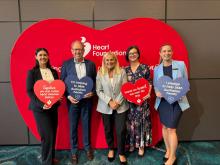
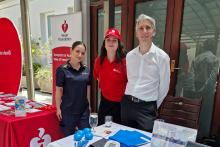
This year, the Heart Foundation is collaborating with St John WA to amplify that message across the state. The partnership connects two sides of heart health that are often considered separately: preventing heart disease and being ready to respond when a cardiac emergency occurs.
The collaboration will draw on St John WA's network of approximately 160 volunteer sub-centres, stretching from Wyndham to Albany, with more than 70 per cent located in regional and remote communities. That reach creates an important opportunity to take evidence-based heart health, CPR and automated external defibrillator information beyond metropolitan Perth.
The great thing about partnering with St John WA is that our end goals are totally aligned.
As part of the initiative, the two organisations are developing a co-branded Restart a Heart activation pack for local volunteers to use throughout October. It will bring together heart health education, CPR and AED awareness, and community engagement materials.
The objective is straightforward: help more Western Australians understand their risk of heart disease, prepare for emergencies and respond with confidence.
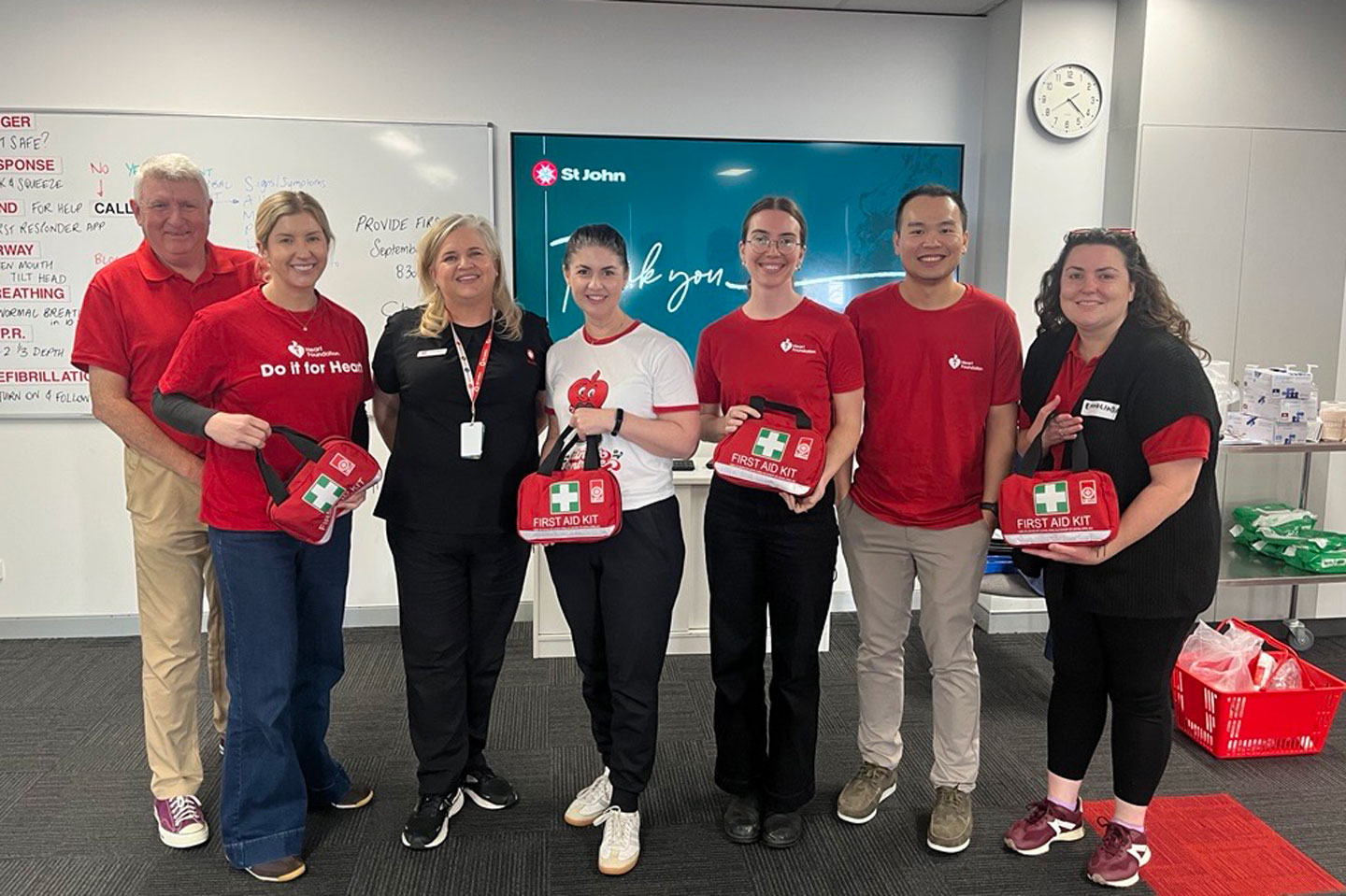
The Heart Foundation is also putting this message into practice. Several members of our WA team recently completed first aid training with St John WA, strengthening their knowledge of CPR and other lifesaving skills. The experience reinforced a simple lesson: confidence comes from preparation.
There are practical steps every employer can consider. Encouraging workers to speak with their GP about a Heart Health Check can help them better understand and manage their cardiovascular risk. Regular first aid and CPR training can give employees greater confidence to act before emergency services arrive. Ready access to an AED, supported by staff awareness of its location and purpose, can further strengthen workplace preparedness.
These measures are relevant across offices, worksites, retail settings, sporting clubs and community organisations. They are especially important for businesses with dispersed operations, where local knowledge and confident first response can be critical.
Investing in workforce heart health and emergency readiness is a practical way for organisations to protect their people and build a culture of preparedness.
On World Restart a Heart Day, I encourage WA leaders to consider two actions: help your people understand their heart health risk and make sure they have the confidence and skills to respond when every second counts.
For more information, contact helena.viola@heartfoundation.org.au


 By Dr Helena Viola - General Manager, Heart Foundation WA