Few international relationships have been as important to the development of Western Australia’s economy as its relationship with Japan.
In the years immediately following the end of World War II, Australia’s relations with Japan improved slowly and were increasingly underpinned by commercial ties. To power a rapidly developing Japanese economy, Japanese trading houses began to invest in Australian coal – even today Australia supplies a majority of Japan’s thermal and metallurgical coal imports. As Japan’s economy expanded, demand for Australian energy, minerals and agricultural products grew.
Building on this foundation of growing trade, the two countries signed a bilateral treaty in 1976, formally entitled the 'Australia-Japan Basic Treaty of Friendship and Cooperation’, commonly known as the 'NARA Treaty’. Among the many objectives of this landmark agreement was a desire to build on those commercial ties to ‘provide wider opportunities’ for the two countries to work together on matters of mutual interest.
This 50th anniversary year provides a useful milestone from which to evaluate those ambitions, and Western Australia provides perhaps the clearest example of how the relationship has evolved. The Australia-Japan relationship helped shape Western Australia’s economy, and is now helping to shape its future.
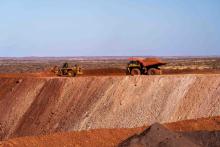
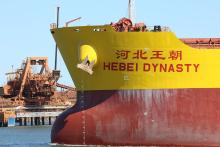
In August 2026, Rio Tinto marks the 60th anniversary of the first shipment of iron ore from the Pilbara to Japan. Since that first shipment, Rio Tinto alone has shipped nearly 2 billion tonnes of iron ore to Japan. More broadly, it is difficult to overstate the role that Japanese demand, investment and long-term offtake agreements have played in the development of the Pilbara region.
Following this successful iron ore model, Japan was also foundational in developing a gas export industry in Western Australia. In 1989, Japan became Western Australia’s first buyer of liquefied natural gas (LNG) and has remained WA's largest LNG export market since. At the same time, the Japanese market has become increasingly important to the Western Australian agricultural sector. Western Australian leaders are justifiably proud of their role in the joint development of the speciality wheat that Japan has exclusively imported from WA for almost 35 years to make udon noodles.
These foundational commercial ties, combined with direct flights between Perth and Tokyo, active collaboration between Western Australian and Japanese universities, and a vibrant tourism trade, might alone lead one to declare the NARA Treaty a success. But the relationship is now moving beyond the trade and investment flows that defined its first 50 years.
Three areas in particular are likely to define the next phase of the WA-Japan relationship: energy transition, critical mineral supply chains, and defence.
Energy transition
We have long understood the importance of Western Australian gas for Japan’s energy security. In 2025, WA supplied some 30 per cent of Japan’s LNG imports.
What is less appreciated, however, is the role Japan plays in our own energy transition. It is difficult to imagine Western Australia building commercial-scale industries around hydrogen, ammonia, future batteries, or carbon capture and storage without the same Japanese investment, technology, and offtake agreements that have helped build our foundational sectors.
This represents an important shift in the relationship – where Japan has traditionally been a consumer of WA resources, it is increasingly becoming a partner in developing the industries and supply chains that will shape our future.
Recent geopolitical tensions and disruption to global energy markets have reinforced the importance of energy security in Japan and globally. Australia itself is coming to understand how dependent we are on imports of liquid fuel. If we fail to consider Japan’s energy security needs in our domestic policy decisions, it is fair to question whether we can rightfully expect Japan to play such a leading role in our own energy transition.
Critical mineral supply chains
Japanese concerns about potential disruption to critical mineral supplies, particularly rare earth elements from China, led Japanese government agencies to invest early and heavily in the West Australian critical minerals sector. Japan has played an essential role in the success of Australia’s flagship rare earths processing company Lynas. It is also working with Australia and the United States on new projects, such as the Alcoa-Sojitz Gallium production plant, which recently reached a final investment decision milestone.
This is an important demonstration of how the relationship is evolving. The objective is no longer primarily to sell resources to Japan, but to build resilient supply chains together.
Defence industry
One of the defining changes in the Western Australian economy over the past decade has been the growth of the defence industry. Progress in this sector has been enabled by engineering and machining capabilities, built through the monumental scale of the state’s mining and energy industries, alongside investment in projects such as the Australian Marine Complex.
Much attention has rightfully been placed upon the AUKUS collaboration between Australia, the United Kingdom and the United States, particularly as US submarines are expected to arrive at Submarine Rotational Force – West as early as 2027. At the same time, the federal government's decision to award the contract to build Australia’s future general-purpose frigates to Mitsubishi Heavy Industries adds another dimension to this rapidly growing sector and the Japan-Australia relationship more broadly.
For Western Australia, Japan’s growing role in Australia’s defence industry provides an opportunity for WA capabilities to become more central to a deeper Australia-Japan defence relationship.
The 50th anniversary of the NARA Treaty is certainly something to celebrate. But its significance is not simply that the treaty’s aspirations have been realised. It is that a relationship built on trade and investment has evolved into a deeper strategic partnership – one that will be increasingly important to the resilience and prosperity of both countries over the next 50 years.






 14 Oct 2026
 01 Oct 2026