With thanks to the WA State and Federal Governments, one of the biggest transformations in cancer research and research-led cancer treatment and care in our State will happen with the development of the Perkins WA Comprehensive Cancer Centre (PWACCC) over the coming years.
The PWACCC will be one of the most significant new health investments in the State over the next few years.
While it won’t be the biggest investment from a funding perspective, nor the largest building physically, the PWACCC will be transformative and lifechanging for cancer patients and their families, WA’s medical research sector and the State’s reputation on a global scale for science and research.
With the State Government committing to the PWACCC in its budget this year, the Perkins has been working with government departments about a Master Plan for the QEII Medical Centre to determine the exact location for the standalone, independent centre.
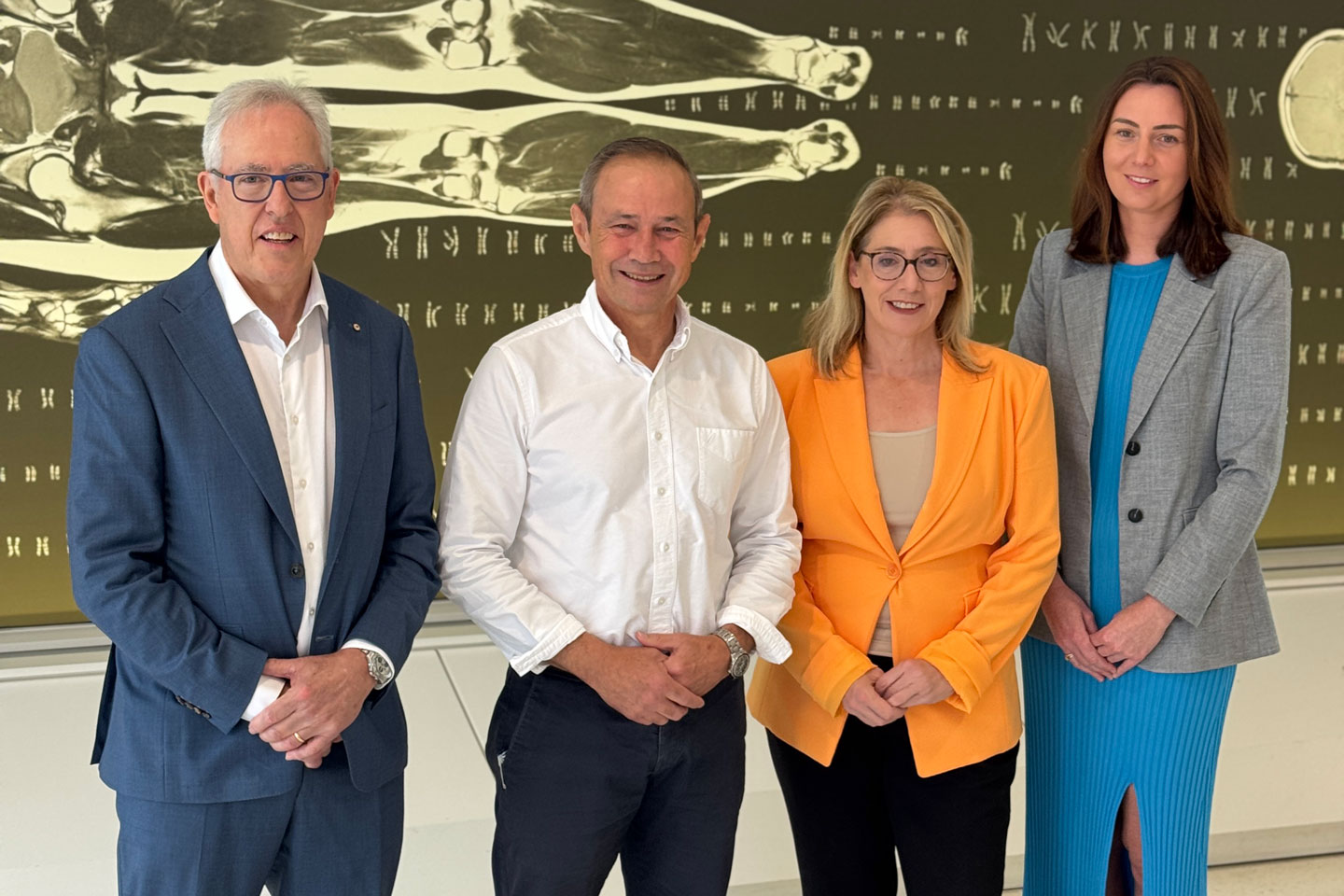
Both Premier Roger Cook MLA and Deputy Premier and WA Treasurer Rita Saffioti MLA said the PWACCC was a priority project for the State Government.
“This has been in my sights for a very long time, but as you can see, it's a complex project, which involves significant levels of funding,” Premier Cook said when he announced the State Government’s support for the project at the Harry Perkins Institute of Medical Research during the New Town Toyota Walk for Women’s Cancer in May.
“It's important to make sure that we've got these sort of leading-edge medical research and service delivery opportunities.
"It's also important around diversifying our economy.”
Deputy Premier Saffioti recognised the opportunity for local business and other organisations to become involved in the project going forward.
“What this (funding commitment) does, is it gives the centre the green light to go ahead.
"It basically means we can now work to deliver the project.
“There's been a lot of discussions, there's been a lot of planning done by the [Perkins] Institute, so there's a lot of work that's been done in relation to how it will operate, the beds and the services.
"Now it's really how we can deliver the Centre in this precinct and make sure we get it right to really maximise the research capacity on this site.
“This is a big priority for our government and for the Federal Government.
"It has been on the Federal Government books for a long time, and the Albanese Government has backed this Centre more recently, so this is a commitment back from the federal and state governments, and as I said, we really believe there'll be a lot of private sector interest in supporting such a centre for Western Australia.
“This is something I know that there'll be a lot of excitement from the philanthropists and private sector companies out there to help support the Centre.”
The scope of the Centre was confirmed by the State Government in 2025 when it agreed to the Perkins Institute’s Strategic Investment Plan which was developed in conjunction with and agreed to by the Department of Health.
This means the PWACCC will comprise of 90 multi-day beds, 40 same-day beds and chairs for chemotherapy and haematology and six to eight beds for intensive care and high dependency patients.
There will be 36 specialist clinics for ambulatory care, space for two radiation oncology bunkers, four to six operating theatres, two procedure rooms and seven imaging services including CT, MRI and PET.
There will be a very strong focus on medical research for the trickiest and hardest to treat cancers and it will complement and boost cancer services locally and regionally.
Services will include care coordination, patient navigation, information support, virtual health services for regional, remote, and Aboriginal patients, and collaboration with WA Country Health Service (WACHS) Command Centre.
There will be urgent review and rapid access services, family amenities located near multi-day beds, transitional palliative care for high-acuity patients and wellness and survivorship programs for support post-treatment.
It would also give patients, their families and the doctors looking after them, access to the research and facilities at the centre regardless of where they live in WA.
A truly comprehensive cancer centre like this will be of major benefit to patients with cancer.
Statistics from Cancer Institute NSW show Chris O’Brien Lifehouse patients have a greater chance of survival at 90 days than the NSW average.
Many factors contribute to this such as a concentration of expertise; a multidisciplinary team approach; access to specialist nurses and supportive care and research is carried out by the same clinicians who treat their patients, eliminating the gap between the laboratory and the clinic altogether.
Breast Cancer survivor and Oncology Pharmacist, Michaela Huston has said that as well as the research and clinical benefits, the PWACCC will have a transformational impact on the human, personal aspect for patients
“When you are faced with a cancer diagnosis, it is an incredibly devastating and overwhelming time, with your life turning into medical appointments, scans, navigating different hospitals, treatment centres, specialists and appointments.
“So, if patients can be referred to one resource where they can help navigate that pathway for patients, I know how valuable that will be for patients with a cancer diagnosis, but also families.
“The Perkins have also thought about all aspects of care, clinical trials, treatment, but also support and survivorship programmes as well for patients, so it's an incredibly fantastic centre.”
More information on the PWACCC is available at perkins.org.au/cancer-centre/