A remote Indigenous-owned airport servicing some of Australia’s largest offshore energy operations is looking to tourism, regional aviation and technology as it enters its next phase of growth.
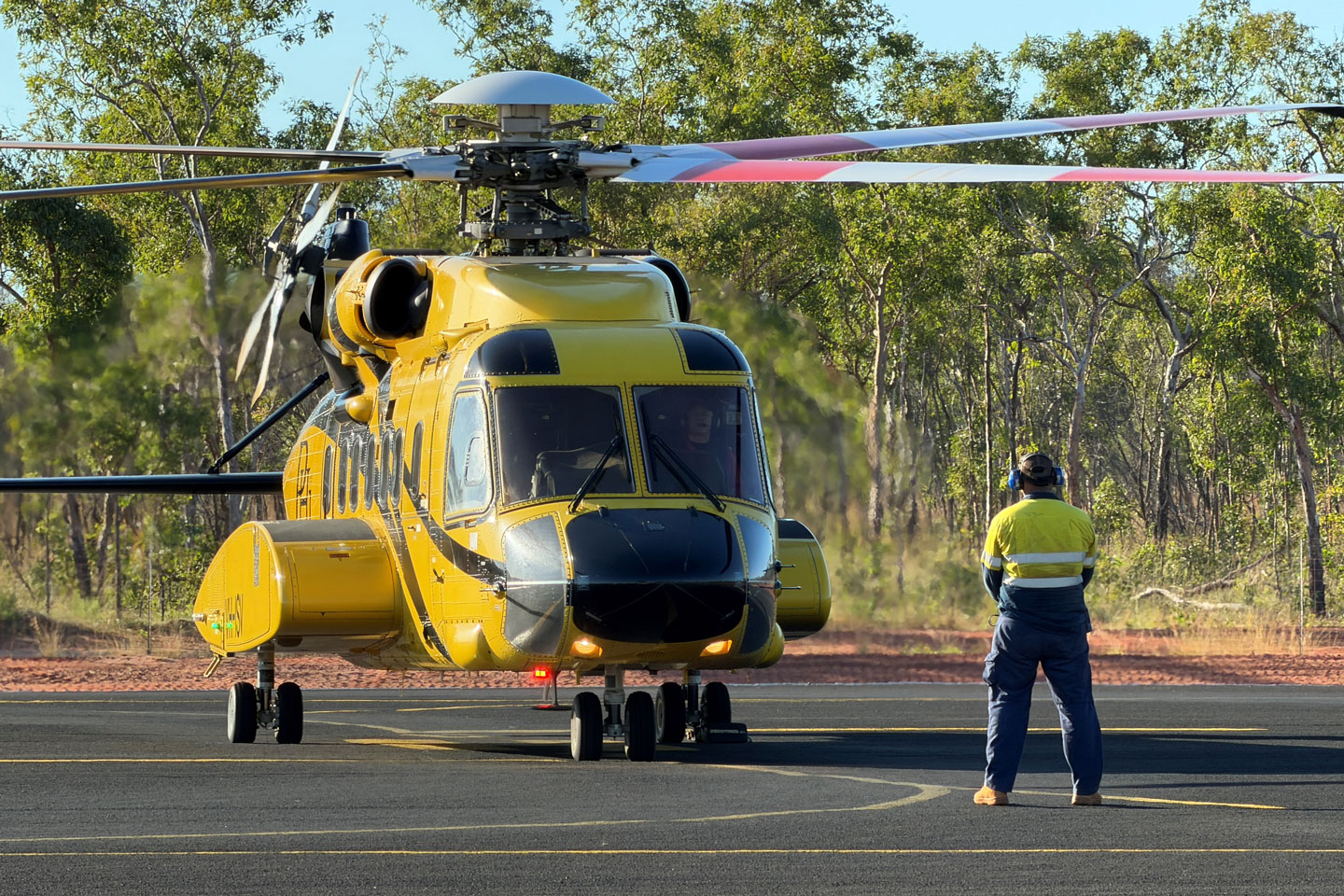
Djarindjin Airport, about 170 kilometres north of Broome on the Dampier Peninsula, has developed into a significant aviation asset supporting Shell and INPEX’s LNG operations in the Browse Basin, about 370 kilometres offshore.
Owned by Djarindjin Aboriginal Corporation (DAC) through Djarindjin Airport Pty Ltd (DAPL), the airport operates the only civil hot-refuelling service of its kind in the Southern Hemisphere.
Its entirely Indigenous airport crew is drawn from communities across the Dampier Peninsula and has been hot-refuelling helicopters carrying passengers to offshore oil and gas operations since 2011.
The business has expanded considerably since DAC took control of the airport's operations and management in February 2022.
Between then and June 2026, DAPL sold about eight million litres of Jet A1 fuel and handled approximately 70,000 passengers through its terminal.
The growth represents a significant step up from its first years under DAC management. Earlier figures showed the airport had sold 2.3 million litres of fuel, handled more than 20,000 passengers and recorded more than 1,800 helicopter movements following the operational takeover.
DAC chief executive Nathan McIvor said the airport demonstrated what could be achieved when remote Aboriginal communities had control over economic assets and invested in local capability.
“The airport is a case study in what happens when a remote Aboriginal community takes control of its assets and invests in its own people,” he said.
“We don’t just operate the airport, we’ve transformed it.”
The airport's development stretches back more than a decade, when the DAC board and members identified aviation as an opportunity to build a sustainable enterprise capable of creating employment and generating long-term revenue for the community.
After deciding to take greater control of the operation, DAC engaged Regional Airport Management Services to provide specialist airport expertise. RAMS continues to work alongside DAC and DAPL in delivering aviation services.
Mr McIvor said Broome International Airport had played an important role in helping build the airport’s capacity, with DAC paying off the $4.5 million loan in 2018 after seven years of operating alongside BIA.
The workforce is central to the airport's broader economic impact.
DAPL’s crew is 100 per cent Indigenous, with employees drawn from communities on the Dampier Peninsula, and the business is beginning to see a second generation of local workers enter its operations.
Mr McIvor said the airport had demonstrated that locally driven economic development could deliver both commercial performance and longer-term social benefits.
“With Broome International Airport’s support, we built the capacity of the airport, paid off the $4.5 million loan in 2018, developed a skilled aviation workforce drawn entirely from Bardi Jawi communities, and created one of the region’s most reliable revenue streams,” he said.
“This is capability in action: complex, regulated industry performance delivered at world-class standards.”
The airport’s long-standing relationships with Shell and INPEX remain central to its operations, but DAC is now considering how the asset can support a broader range of activity across the Dampier Peninsula.
Its priorities include regional and business aviation, high-end aviation and cultural tourism, essential and emergency services, and future commercial and industrial development.
DAC plans to maintain free access to airport facilities for medical and emergency services, reflecting DAPL's role as critical infrastructure in a remote part of Western Australia.
Diversification is also extending beyond the airport's physical operations.
Following the development of a strategic plan in 2024, DAPL began working with software developer Aero Ascent on technology designed specifically around helicopter turnaround operations.
The resulting application is used at Djarindjin Airport to support its operations and, according to DAC, is the only airport software product of its kind built around helicopter turnarounds.
DAC is now considering a joint venture with Aero Ascent that could commercialise the technology for other airports internationally, potentially creating another revenue stream from expertise developed on the Dampier Peninsula.
The opportunity represents a notable evolution for an enterprise initially established to service offshore resources activity: from operating aviation infrastructure to potentially exporting technology and operational knowledge.
Over the next two years, DAC's focus is to establish DAPL as an increasingly diversified aviation business while retaining the LNG operations that underpin its commercial base.
For Mr McIvor, the airport's success is ultimately about demonstrating a model of Indigenous economic participation built around ownership, capability and long-term sustainability.
“Djarindjin Aboriginal Corporation has built something that is sustainable and will be here for generations to come,” he said.


 By Djarindjin Aboriginal Corporation