There is a simple test of confidence in a regional economy: follow the money.
In the South West, money is moving. The WA Government has committed $55 million to establish the Advanced Manufacturing Technology Hub (AMTECH) at Picton, with earthworks now underway and a Request for Proposal process now open for an anchor tenant. Almost $700 million has been committed to supporting Collie's Just Transition away from coal-fired power generation and into new industries. Through Synergy, more than $1.6 billion has been invested in the Collie Battery Energy Storage System, one of the biggest batteries in Australia. And in the 2026-27 State Budget, over $68 million was allocated towards power infrastructure, land assembly and water supply studies for Kemerton Strategic Industrial Area, supporting future industry attraction to the South West.
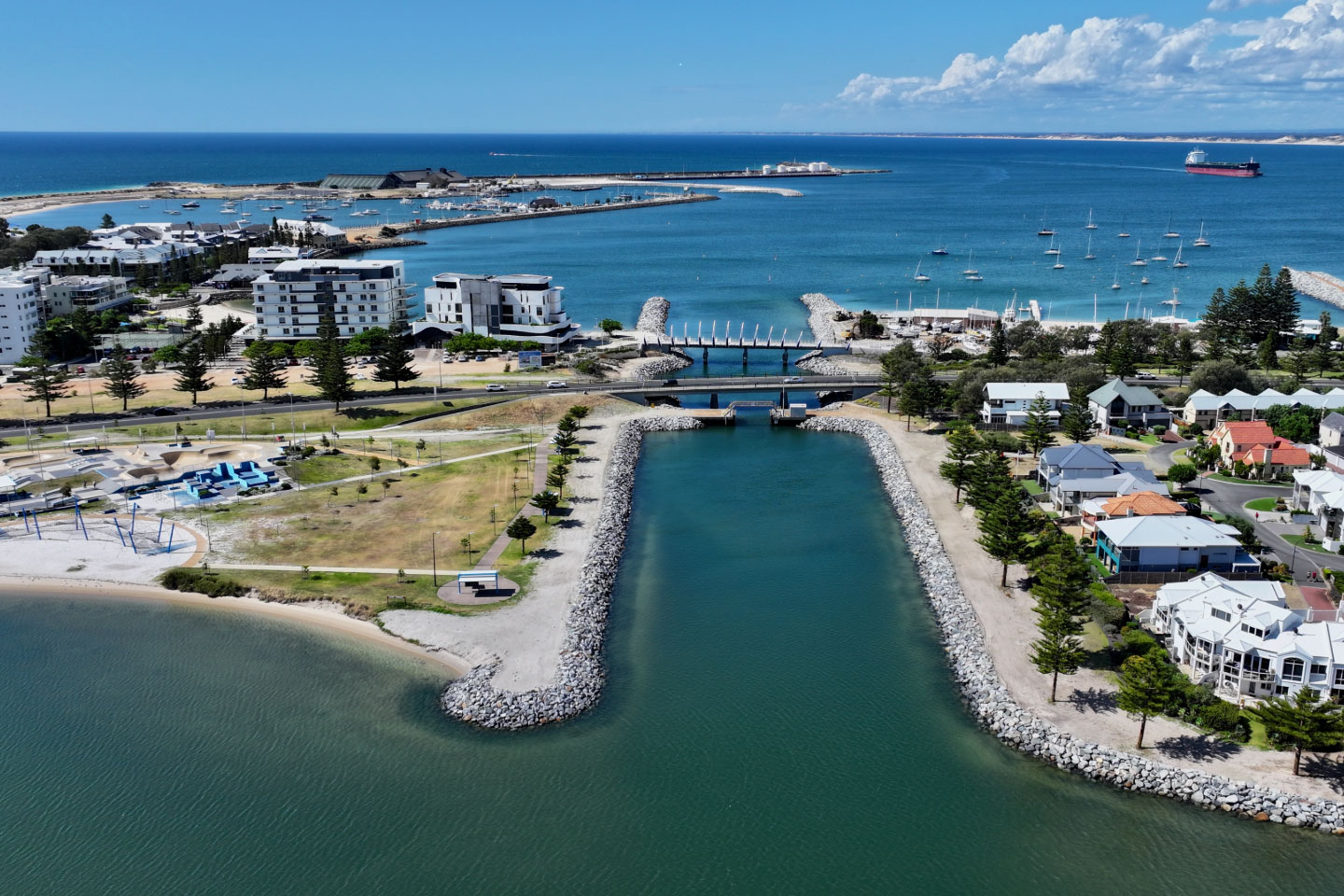
Bunbury itself is part of the same story, with a further $89.1 million invested in the Transforming Bunbury's Waterfront project and $4.8 million committed to planning for additional capacity at the Port of Bunbury, forecast to play a key role facilitating new trade opportunities for WA and supporting job creation across ports, manufacturing, and emerging industries.
It is against this backdrop that the South West Development Commission will host the Innovative Industries of the Future Conference (iiF 2026) in Bunbury from 26 to 29 October, bringing together industry leaders, investors and policymakers shaping the next era of regional industry.
The scale behind the story
The South West is Western Australia's largest region by population, home to more than 206,000 people. The region is the most economically diverse of the non-metropolitan regions, generating a gross regional product of $19.8 billion and supports more than 110,000 jobs.
Manufacturing is already one of its biggest industries, contributing close to $9.9 billion to State output in 2025, and generating around nine per cent of regional employment. With strategic industrial land, renewable energy capability, critical minerals opportunities, and established port and rail connections, the region holds the key foundations that global analysis identifies as critical for where future industries locate.
The World Economic Forum's Energy Transition Index Insight Report highlights that, as countries balance energy security, affordability and sustainability, competitiveness will depend on delivering reliable grid capacity, energy storage, critical minerals supply chains and infrastructure resilience. The South West's strengths are closely aligned.
Collie: transformation in action
Nowhere is the shift more visible than Collie. The Collie Battery Energy Storage System features 500 megawatts of storage capable of 2,400 megawatt hours of output, enough to power 785,000 homes for more than four hours, and is the third grid-scale battery delivered in just over three years as the State moves away from coal-fired power by 2030.
Around the batteries, a new industrial ecosystem is forming. Generation Steel (formerly Green Steel of WA) is progressing Australia's first low emissions steel mill, a project with capital expenditure of over $850 million. International Graphite has commenced construction of its micronising facility, supported by $4.5 million in State funding, supporting further industry opportunities in the lithium battery supply chain. Magnium Australia is establishing domestic production of magnesium, a critical defence and automotive metal, with support of $7.5 million from the Collie Industrial Transition Fund.
Private industry has picked up on the groundswell of new industry opportunities, with Tesla having recently established a battery re-manufacturing facility in Collie to service, repair and renew its battery products, including Megapacks.
Finally, with the WA Government having recently completed an expression of interest process for the Western Defence Forge, a proposed nationally significant advanced defence manufacturing hub, with the South West's industrial land, rail and port connections positioning the region strongly to be an early supporter of this new industry.
Where the next era is discussed
iiF 2026 will focus on four growth industries identified for the region: energy, advanced manufacturing, agritech, and the circular economy. Backed by the WA Government, the conference will be opened by Minister for Regional Development Hon Stephen Dawson MLC and Minister for the South West Hon Don Punch MLA.
The program includes tours of the region's major industries and industrial sites on 26 October, two days of keynotes and panels at the Bunbury Regional Entertainment Centre on 27 and 28 October, and focussed, invite-only boardroom discussions on 29 October. Speakers include Dr Jordan Nguyen and Renee Wootton Tomlin, with Tesla and Defence West joining these key speakers.
Attendees of the conference will include CEOs and senior executives, energy and resources professionals, manufacturers, agritech and technology businesses, researchers and government and economic development representatives.
For businesses and investors looking at where Western Australia's next wave of industrial growth will land, the answer is increasingly clear. In October, the South West will make its case in person.
Register at www.iifconference.com.au






 11 Jun 2026
 09 Mar 2026
 14 Feb 2025
 20 Dec 2024
 03 May 2024