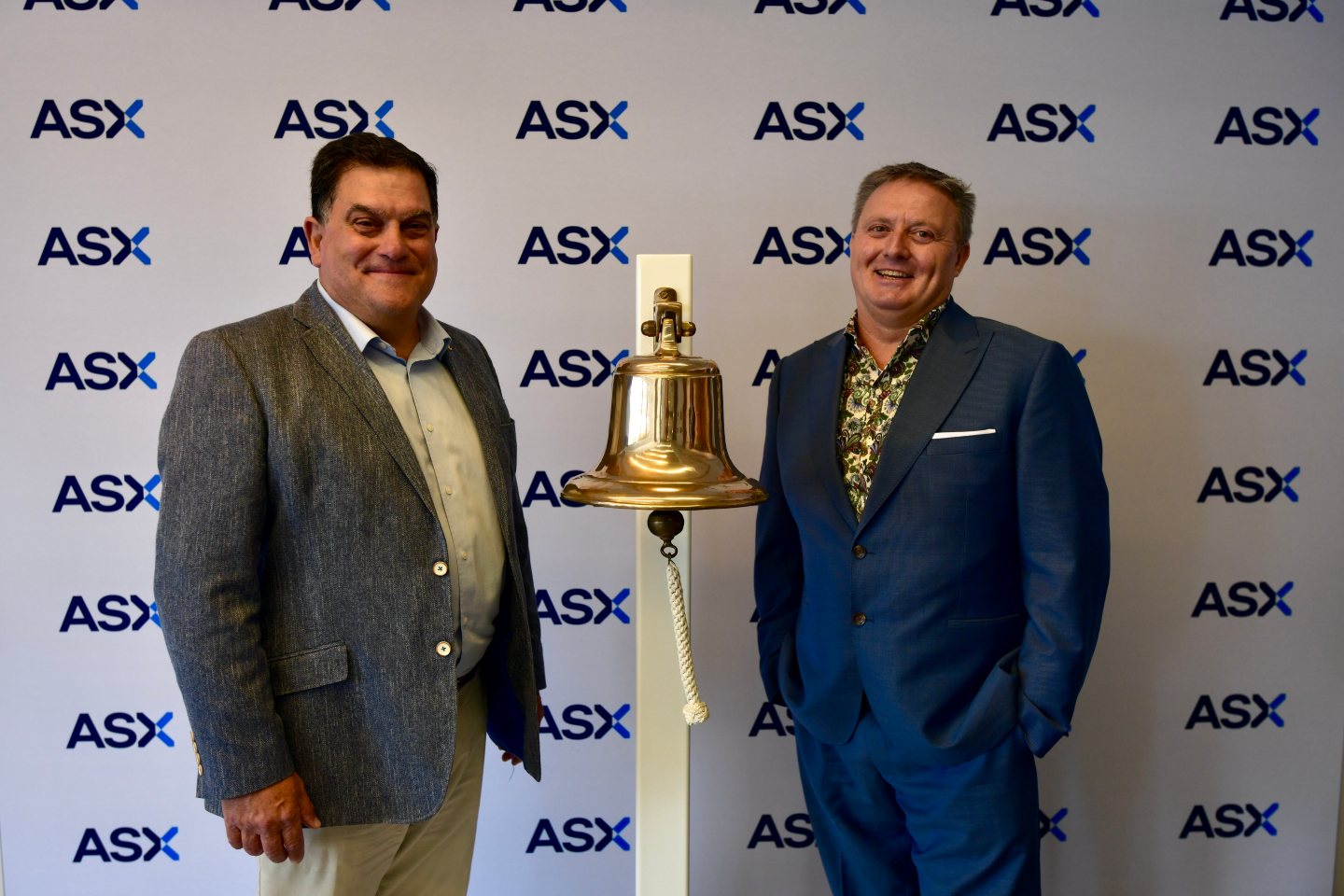
Perth-based drone manufacturer Innovaero has debuted on the Australian Securities Exchange under the ticker INN, following a fully subscribed $40 million initial public offering that values the company at $158.3 million.
The listing—backed by joint lead managers Euroz Hartleys and Canaccord Genuity through the issue of 80 million shares at 50 cents each—provides the 20-year-old aerospace firm with fresh balance sheet strength to expand its product pipeline, build mass manufacturing capability, and pursue allied export deals.
The company is currently developing the OWL-B loitering munition system for the Australian Defence Force under Mission Talon Strike, and has a contracted order book of $20 million, $15.5m of which will be delivered under the mission.
Shares briefly rallied to a high of 53 cents per share following the listing, but fell to 49 cents by midday.
Innovaero chief executive Greg Tunny told Business News that public markets offered the right vehicle to match the company’s operational maturity and global ambitions.
“Innovaero will emerge from Mission Talon Strike with a certified product able to compete against any loitering munition in the world,” he said.
“The sovereign venture fund was a possibility, but in the end, we chose to go public because it's where you end up anyway, and we felt we were ready... Innovaero turned 20 earlier this year.
“That brings a lot of maturity and stability into the organisation. We’re not trying to build every process to run the company at the same time as trying to raise funds.”

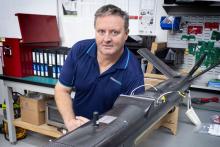
Innovaero's OWL-B drone. Photo: Innovaero.
The firm recently passed its preliminary design review and completed kinetic live-fire testing at the Woomera test range in South Australia.
Testing milestones remain intensive ahead of targeted entry into service in 2027, with 29 OWL-B test units slated for delivery by late November and a further 15 across the remainder of the development contract.
Innovaero is targeting full certification in the manned-aviation regulatory tradition, a benchmark Mr Tunny believes will mark a Western-world first for loitering munitions.
Capital raised from the IPO will fund the development of the OWL-X, the company's first jet-powered strike variant, which is currently in prototype flight testing.
While the electric OWL-B and the faster OWL-X will feature distinct propulsion and airframes, both will share a modular, proprietary core mission system.
Proceeds will also underpin tooling and production expansion at Innovaero’s planned Jandakot facility, supported by a $7.5 million State Government Investment Attraction Fund grant.
The facility is planned to lift throughput from a current nameplate run-rate of 250 units annually up to roughly 2,500 units per year across multiple phased investment tranches.
“We won't build 2,500 and wait for orders to catch up because defence doesn't move as quickly as a consumer product,” Mr Tunny said.
“We’ll be able to work with current and prospective customers to align capital investment with order intake."
Allied export strategy
The IPO comes after Innovaero bought back its 51 per cent majority stake from defence prime BAE Systems late last year.
BAE has retained exclusive distribution rights for the OWL family in the United Kingdom alongside non-exclusive international rights.
Mr Tunny said Innovaero was in discussions to establish similar sovereign manufacturing and distribution partnerships in other key allied markets, including the United States, with announcements expected over the next 12 months.
“We would anticipate manufacturing in target markets. That might mean we build some kits here and they do assembly there, or it may mean a joint venture,” Mr Tunny said.
“OWL-B is primarily designed to meet the needs of the Indo-Pacific—the range and the nature of missions require a much longer range and larger warhead than the plains of Europe.
“Having that modular design and working with partners builds a much more resilient organisation.”
While Innovaero champions sovereign capability, Mr Tunny acknowledged early production required an international supply chain, describing its component integration as a “United Nations of good equipment”.
“For example, we have a Spanish autopilot, which has worked extremely well for us and is very responsive to our customer-desired customisations,” he said.
“When you're building in batches of 10, an Australian option is just not wholly viable.
“If you're building 1,000 a year, things become possible. It opens the opportunity for Australian SMEs to manufacture components like electric motors under licence or develop competitive local alternatives. It’s just the economics of it all."
The economics of modern strike
With traditional cruise missiles costing between $US2 million and $US5 million each, Mr Tunny said the shift toward lower-cost, high-reliability autonomous strike platforms priced between $150,000 and $500,000 provided defence forces with critical replenishment depth.
Addressing stock market volatility and typical defence procurement delays, Mr Tunny dismissed concerns over investor patience.
“Defence is a very good customer once you get into production,” he said.
“The public invests in a number of businesses that require patience, but this type of equipment globally is growing exponentially.
“We don’t want to be a laggard—part of why we floated was to push the product family forward and compete internationally right now.”
The company's prospectus revealed revenue in the most recent financial year of $17.2 million, with first half FY27 revenue forecasts sitting at $14.4 million.
It was sitting on $10.4 million in cash before the listing.
Innovaero founder Mike von Bertouch held 87,459,268 shares post-IPO, valued at $43 million.