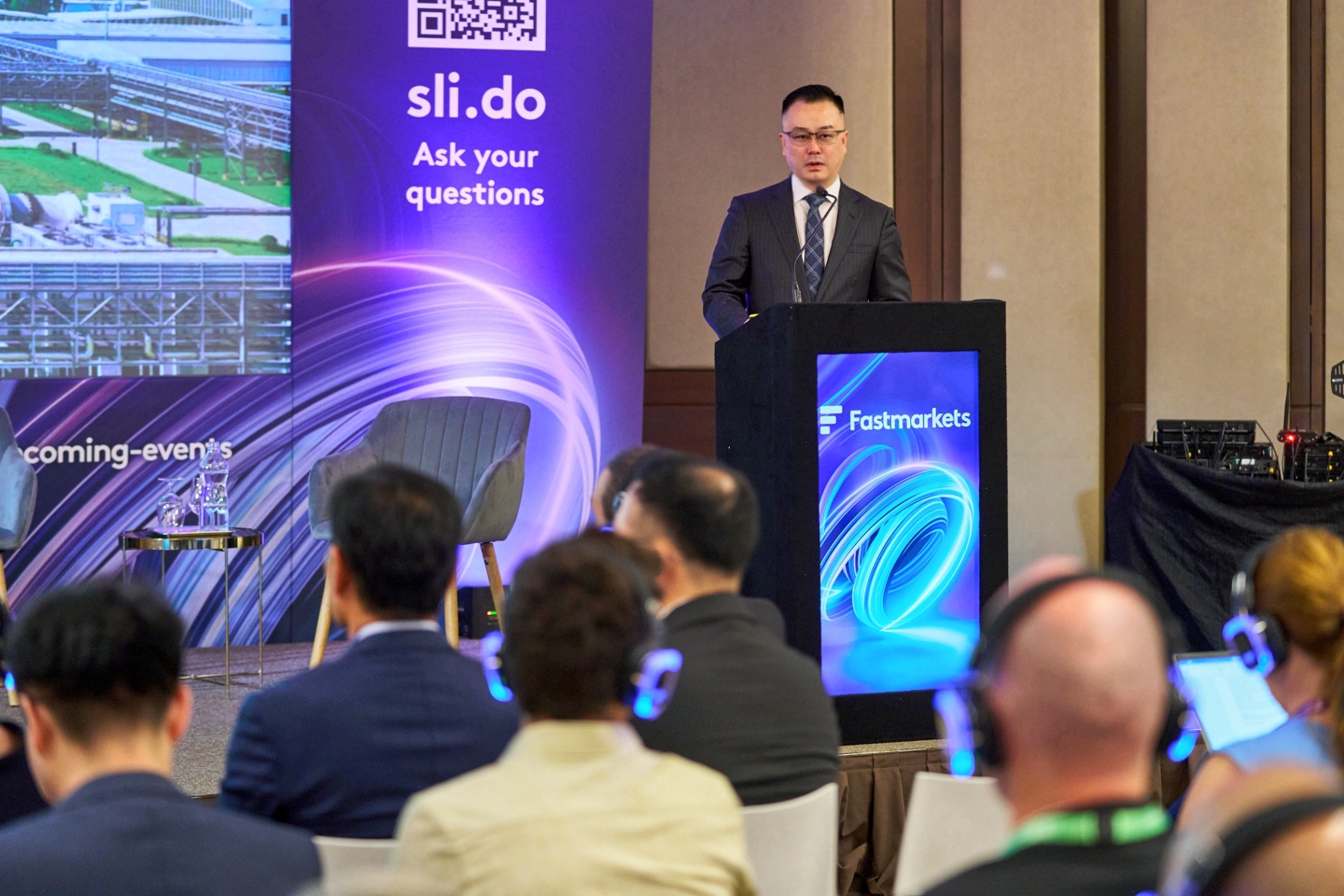
Greenbushes co-owner Tianqi Lithium’s chief has warned that the absence of a credible green lithium pricing mechanism threatens to derail investment in decarbonised production.
Tianqi Lithium chief executive Frank Ha said demand for green lithium was set to surge but the market’s inability to price green value threatened the technology investment required to increase capacity to produce a green battery-grade product.
In a keynote address at the Fastmarkets conference in Budapest, Mr Ha said demand for green lithium was expected to reach 40 per cent of the market by 2030.
Mr Ha added that the full decarbonisation of lithium production could increase costs by up to 20 per cent, but the price premium for the green product was not reflected.
“Globally, there is now consensus that the energy sector must go green. Yet, there is a significant misalignment between green investment and green value, and the way that value is recognised by the market,” Mr Ha said.
“If green value cannot be recognised through market mechanisms, incentives for further investment into green technologies and capacity will weaken.
“As an industry, we need to solve for this challenge, ensuring real, verifiable green value is recognised through a more transparent pricing mechanism.
“This is particularly relevant in major producing markets, such as Australia, where higher sustainability standards increasingly form part of the industry’s long-term competitiveness.”
Locally, Tianqi is the joint venture partner of IGO in the Kwinana lithium hydroxide refinery, of which the pair have been increasingly at odds over the future of the plant.
Last year, Mr Ha used a trip to Perth to double down on his commitment to the technical issue-plagued Kwinana after IGO wrote down its share of the asset to zero.
The Chinese major also owns an indirect 26 per cent stake in the Greenbushes lithium operation in the South West, alongside IGO (25 per cent) and Albemarle Corporation (49 per cent).
Mr Ha said low-carbon production and supply chain transparency were in the past seen as a nice-to-have features but were now becoming requirements for market access and participation.
He called upon independent price reporting agencies and industry needed to work together on establishing a uniform, global standard for green lithium pricing.
Lithium trading is dominated by long-term, private contracts and emerging spot auctions with there being no centralised exchange, leading to more opaque and volatile pricing.
Fastmarkets and Benchmark Minerals Intelligence are among the price reporting agencies specilaising in lithium products.
Mr Ha's comments are in the same vein as those of WA miners PLS and Liontown, whose chiefs have more broadly called for more transparent pricing mechanisms to curb volatility.
The "lack of a credible and consistent green value mechanism is one of the key challenges to the future viability of green lithium", Mr Ha said.
“In commodities, price discovery mechanisms typically evolve as markets mature,” he said.
“For green lithium, we are still at the early stages with value predominantly reflected through premiums negotiated in bilateral contracts.
“The result is pricing that is fragmented and a market that lacks independent, transparent, and comparable green pricing.”