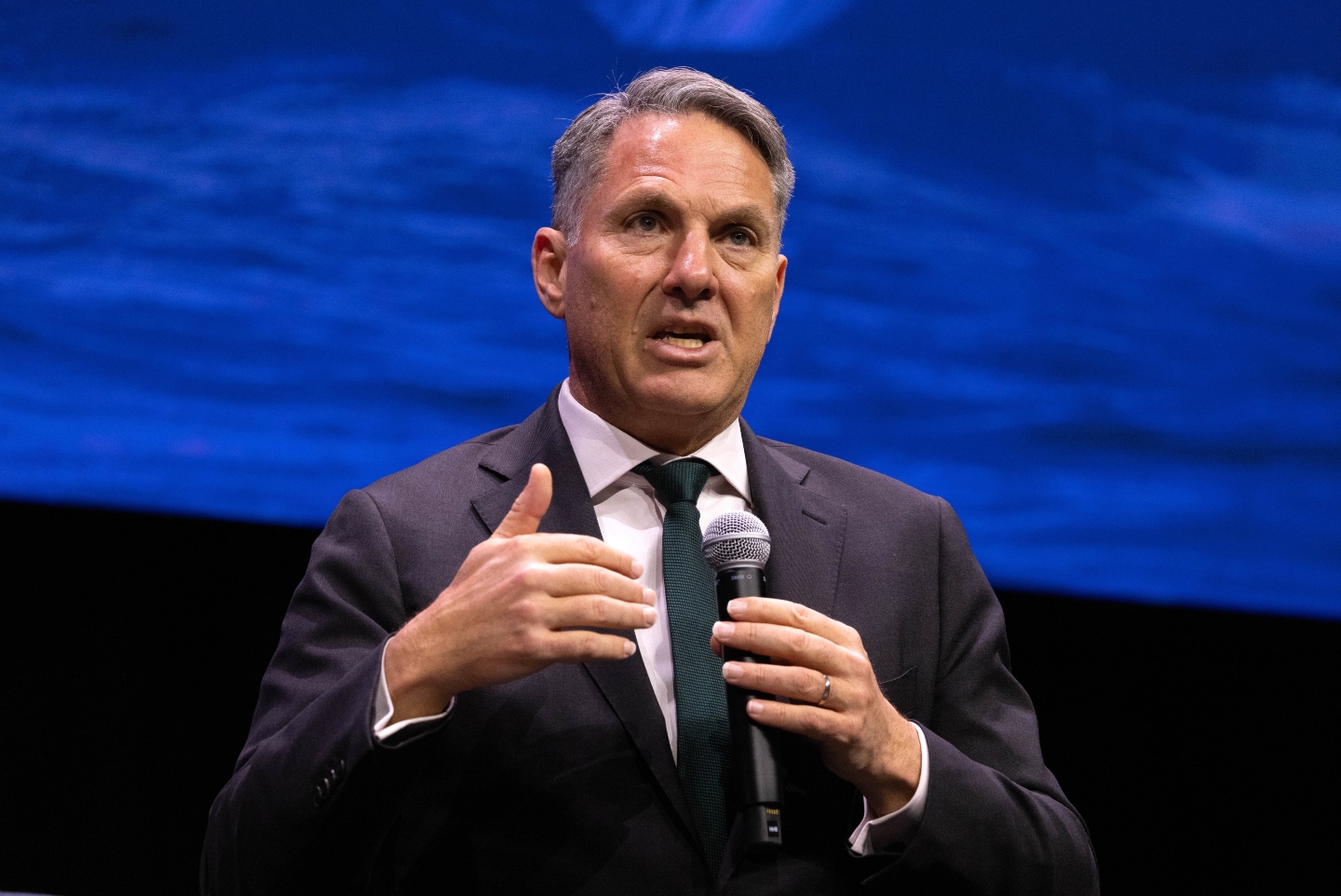
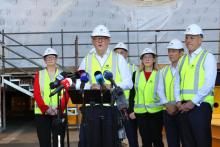
The Henderson Defence Precinct will have at least two dry docks, and possibly up to four in coming decades, according to Defence Minister Richard Marles.
Mr Marles said $12 billion had already been committed to the first stage of the facility and construction would commence soon.
The goal was to have the first stage, including one dry dock, complete by 2031, in time to begin work on the fourth Mogami class frigate, the minister said.
“Construction will start soon. We are confident we will meet those timelines. That's perhaps the most important thing for me to say this morning,” Mr Marles said.
“And getting that agreement around the precise boundary of the [Henderson] precinct really was a critical breakthrough.”
In terms of the number of dry docks at the facility, Mr Marles said it would be more than one.
“it's plural. It's more than one, and we are really working through at least two and conceiving of a laydown area, which provides functionality going into the future.
“And when we say that, this is a matter over decades.
“When we are thinking about the future of Henderson, we are literally looking into the 2050s in terms of the kind of needs that might be required.”
While decisions had not been made that far ahead, there was room for four dry docks, if required, the minister said.a
While much of the cost of the Henderson project will be borne by the public purse, Mr Marles said there was also an opportunity for alternative source of finance, including from the major superannuation funds.
He said the government’s goal was that of the $425 billion budgeted for defence over the next decade, $15 billion would come from alternative funding sources.
“The defence strategic review articulated this as a real opportunity for Australia, given the funds under management that we have in our superannuation sector. I think we are fourth in the world right now.
“With that kind of capital existing in Australia, this is obviously a lever that we should look to pull.”
Eventually, he said, the Henderson development would be more than $25 billion and could reach around $60 billion.
“That's the pathway that we're on. The $12 billion that we've already got in the budget gets us through all of those key milestones, which I've described, and gets us to [20]31 and beyond.